
When Blooms Become Looms
Aug 11, 2026
story
Seeking
Encouragement


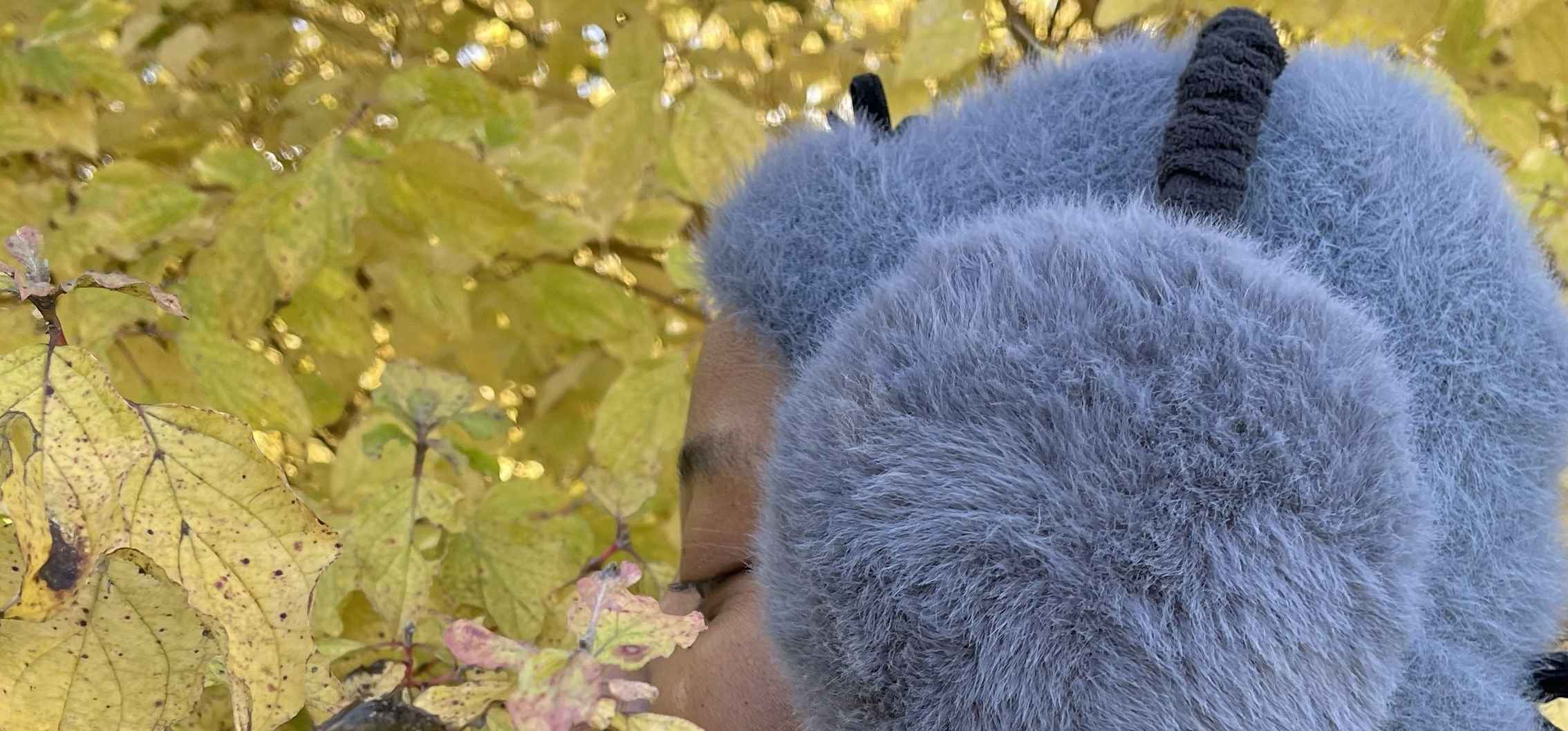
Ten years ago, I was applying for scholarships to pursue a master’s degree abroad when someone asked me a question I have never quite forgotten.
“Isn’t it too late for that? Shouldn’t marriage be your next progression?”
It was not asked with malice. It was asked as though there were an obvious order in which life was meant to unfold. Education came first, then work, then marriage, then children. The sequence seemed so self-evident that wanting something outside of it appeared almost unusual.
At the time, I did not challenge the question. In fact, it stayed with me far longer than I cared to admit. It quietly rearranged the way I thought about my own life. For a while, I stopped applying. Not because I no longer wanted the opportunity, but because I began wondering whether I had somehow missed my moment.
Years later, I found myself doing the very thing I had once resisted. Without realising it, I had begun measuring my own life against invisible milestones too. Reading an old letter I had written to my future self, I realised I had attached many of my dreams to specific ages, quietly believing that if life unfolded differently, I had somehow fallen behind.
Nothing in my life had changed during those few minutes. The only thing that had changed was the timeline against which I was measuring it.
That was when I realised my bloom had quietly become a loom hanging over my life.
Perhaps it had been there all along.
Press enter or click to view image in full size
Regardless of background, circumstances, or environment, society expects people to bloom according to a prescribed timetable. The expectations continue to increase, yet the hours remain the same. We still have only twenty-four hours in a day, even as the list of things we are expected to achieve grows longer.
There was once a time when simply attending school was considered an achievement, regardless of the age at which someone graduated. Today, if a person is still in high school at eighteen, others may begin to wonder what went wrong. Education, careers, relationships, homeownership, marriage, and parenthood are often treated as milestones with invisible deadlines. Anyone who reaches them later than expected risks being made to feel as though they have fallen behind.
You have probably heard the phrase late bloomer and wondered whether it describes you. Perhaps it does. Perhaps it does not. But the more important question is why blooming should be considered late at all.
Flowers do not apologise for the season in which they open. They do not compare themselves with the flowers beside them or force their petals apart because another plant has already begun to blossom. They grow according to the conditions surrounding them: the soil, the weather, the light, and the care they receive. People are no different. We may share the same world, but we do not grow under identical conditions.
Blooming was never meant to become a deadline. It was meant to be an unfolding — a gradual arrival into yourself. It should allow you to enter the world in your own way, not force you into a race designed around someone else’s pace.
Perhaps this is why late bloomers are sometimes compared with wallflowers. Both terms are commonly used to describe people who appear to move differently from those around them. A late bloomer is seen as someone who develops or succeeds later than expected. A wallflower is someone who remains quiet at the edge of a social gathering, unnoticed or reluctant to participate.
Whenever people behave differently from what society considers normal, curiosity is often replaced by judgement. Instead of asking why someone has taken another path, people create labels. Over time, those labels begin to sound like limitations.
Yet a wallflower is more than a name given to a quiet person. It is a real plant, known for growing from rocky walls, narrow spaces, and difficult terrain. Despite the harshness of its surroundings, it produces vivid flowers and a sweet fragrance.
People often notice the wall before they notice the flower.
Press enter or click to view image in full size
The same is often true of people.
Others may notice your delays before your determination. They may see the years you lost, the opportunities you missed, or the obstacles you faced before they recognise the strength it took to continue. They may judge the place from which you grew without understanding what it required for you to bloom there.
But not every label must remain an insult. A wallflower can represent resilience. A late bloomer can represent patience, endurance, and growth that refused to be rushed. The names people use to reduce you can sometimes be reclaimed as evidence of what you survived.
Wallflowers and late bloomers have one important thing in common: flowers bloom in their own seasons. Some grow in carefully maintained gardens. Others push through stone, damaged roofs, and forgotten corners. Their surroundings may influence how they grow, but they do not determine whether their bloom is worthy.
Perhaps this is where nature has always been wiser than we are.
Press enter or click to view image in full size
Winter is dark, cold, and quiet. The days are shorter, and the nights seem to stretch endlessly. It is a season often associated with loneliness, sadness, and even depression. Yet it is also the season in which we ask the most of ourselves. At the beginning of each year, we are encouraged to become new people overnight. We review the year behind us, measure what we achieved, write ambitious resolutions, and expect immediate transformation, while nature quietly does the opposite. Beneath frozen ground, roots strengthen where no one can see them.
Perhaps that is why so many of us mistake stillness for failure.
Rest is not the absence of progress. Sometimes growth is occurring in places that cannot yet be measured or displayed.
Summer, by contrast, is bright, energetic, and full of life. It is the season most associated with flourishing. Yet even summer has its own burdens. Beneath the beauty lies relentless heat, and what appears vibrant can quickly become exhausted. We often expect ourselves to spend the middle of the year proving that our resolutions are working, showcasing achievements and demonstrating progress, forgetting that even the strongest seasons can become overwhelming.
Spring and autumn remind us that life is constantly moving between beginnings and endings, growth and release. Neither season apologises for what it is. Neither tries to become another.
Press enter or click to view image in full size.
Every season carries both beauty and difficulty. None remains forever, and none should be mistaken for the whole story.
Our lives move through seasons too.
There will be periods when your progress is visible and periods when it exists only beneath the surface. Some seasons will require you to move. Others will require you to pause. Neither makes you less capable of becoming who you are meant to be.
So, should you bloom only when others expect you to, or should you allow yourself to unfold in your own time?
Perhaps the answer lies beyond society’s clocks, calendars, and milestones. Growth cannot always be forced into a schedule. What matters is not whether your life resembles someone else’s timeline, but whether you continue becoming without allowing outside pressure to convince you that your season has already passed.
Do not pull at your petals simply because someone else has already opened. Do not mistake a quiet season for a wasted one. Nurture your roots, protect what is growing within you, and trust that unseen progress is still progress.
Press enter or click to view image in full size
Perhaps I will still write another letter to my future self.
This time, I hope it leaves enough room for life to surprise me.
After all, blooms were never meant to become looms.
- Caring for Ourselves
- Global