
What I learned from Latin American Spaces.
Dec 23, 2025
story
Seeking
Visibility
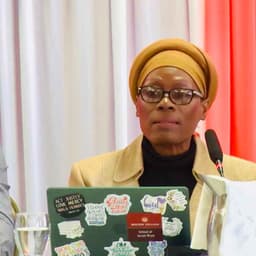

Photo Credit: Photo credit to Sherna Alexander Benjamin
I have spent close to five years engaging with groups and experts from Latin America. I have visited countries in Latin America and listened to stories, witnessing the love for country and ideologies, as well as the sharing of oral histories. But also watched the fight for justice and liberation. And the investment in development and trade.
I have observed the investment in political landscapes and the honor, even when profound disagreement is present. But more so, the covert and overt support for one another to advance their agendas.
I have learned a great deal from engaging with the Latin American space, and much of what I write here is based on my observations, which should not be generalized or used to stereotype.
I always wondered why there continues to be a low Caribbean presence during various multilateral sessions, or why Caribbean experts and leaders are often missing during key negotiations. I often wondered why the OAS comprises 99.99% of persons from Latin America.
It's because people in Latin America have a strategy and a vision; they hold and honor their histories, and they invest in and sponsor their people to be in these spaces.
They may appear divided to outsiders; however, they are intricately connected and push each other's vision. They invest in their people, despite facing many of the same complex challenges as other countries. They leverage their resources, including their people and other assets.
Many citizens of these countries possess a level of patriotism and honor that surpasses the human mind and is on a different level. And they never forget. They ensure that every generation understands the birth of their nation, its struggles, the role of its pioneers, and its visions.
The Caribbean is strategically placed. At the same time, the nations are vulnerable. Yet there is significant fragmentation and erosion of trust in each other. There is a lack of cohesion and a lack of vision. Many view elected office or appointment as a senator as the ultimate goal.
Each country is fighting for survival as each sells a piece of its soul to the highest bidder or undermines the others. And the latter is one of the factors contributing to the decline of the region, as divide-and-conquer tactics are employed against it.
There is a lack of sponsorship in the region's own people, yet many talk about brain drain; the region is not leveraging its power and is being left behind.
Even though countries in Latin America may appear divided, they share a level of patriotism towards their country, as well as allegiance to groups, family, and social standing. Honouring legacies and working to ensure their mandates are realized. Such must not be underestimated.
They build trust before they build a relationship. Allies are just that. They do not hold any venerated space. Diplomacy, respect, and honor are codes. Nothing is done by chance, and there is a loyalty to the grave to country, ideologies, and flag.
I am adding this to this space as I observe what is unfolding, and while I am not directly addressing the situation between the USA and Venezuela, with Trinidad and Tobago situated in the middle.
I am speaking about something deeper and more philosophical: patriotism, allegiance, honoring the pioneers' fight, belief in the country, legacy, respect, and ideology that I have observed among many in Latin America.
I see many people in Trinidad and Tobago laughing at the women and men who are joining the militia in Venezuela, even laughing at Maduro. I see nothing to laugh about. But deep saddnes at the breakdown of diplomacy, peace, and negotiation.
There is no joke in seeing women of all ages who have made up their minds to lay down their lives for their country and what they believe in. Do not underestimate their belief if a war breaks out and the present regime is overthrown. The people are not fighting for Maduro or any person who may come after him. They are fighting for something beyond tanks and drones.
I see U.S. military might in the Caribbean Sea and on our shores. That's no joke, and don't underestimate it. The American soldiers are not their own, and they fight for something bigger than President Donald Trump. They are fighting for an ideology about America. Trinidad and Tobago holds no significance for this ideology, and it serves merely as a means to an end in the process, where the end justifies the broader means.
No one wins a war, regardless of who emerges as the greater victor in terms of strategy. Ideologies are not fought with tanks, guns, and radars—or militia, rhetoric, and legacies.
If as countries we have learned nothing from the rise and fall of the Roman empire, the Crusades, the Tang Dynasty, the Cold War, and the fall of the Berlin wall, World War I and II, the Haitian Revolution, or the genocide against the Tutsi in Rwanda. Twenty years from now, the ideologies that are enabling wars across the globe, and threats of war near and far, will still be alive unless humanity itself engages in its own reckoning and changes.
While many are laughing at what they may see as comical in Venezuela, and while many may be reviling the U.S. for its positioning, the question is, would those of you who are laughing or reviling, would you lay down your life for your country or cower and hide if there ever comes a time when your country is under threat or attacked? But more profoundly, what type of peace are you modelling?
- Economic Power
- Leadership
- Education
- Global