
We Refused to Be Slaves of Aid
May 9, 2026
story
Seeking
Encouragement


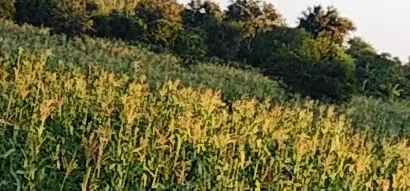
Photo Credit: Photo by Faith
Photo by Faith
I grew up in a semi-arid village in Kenya, where low rainfall was normal and drought was something we all understood before we even knew the word climate change.
There were years when it barely rained. The land would dry up so quickly. Crops never survived long enough. Everything looked tired, even the soil.
During those years, our village depended heavily on food aid.
As children, we did not fully understand what that meant. We only knew that trucks would come, and with them came food. I remember the yellow maize flour so clearly. It was sweet, so sweet that sometimes we would eat it raw before it was even cooked. There was also yellow maize we used to call Katongelele and containers of cooking oil which were boldly written USA. I loved those days, not because life was easy, but because as a child, you do not always see hardship the way adults do.
But now I understand what my parents must have felt. No one wants to live as a slave to aid.
One memory has stayed with me for years. I once visited my aunt in another part of Kenya, and it felt like I had entered another country. Her home was green. Really green. They had mangoes, oranges, maize, beans, fruits everywhere. The air itself felt cooler. Alive.
I remember going back home and telling my father how beautiful her place was. He looked at me and said, “That is a different environment. At least they receive rainfall.” That sentence stayed with me.
Then came the turning point. One season, food aid came, but there was not enough for everyone. We were told only the most vulnerable families would receive it. Our family didn't qualify. Somehow, we were considered “better off,” even though we were struggling too.
That evening, I remember hearing my father tell my mother, “We need to do something. We are not going to be slaves of aid for our entire lives.” That was the beginning.
I had always longed to see our home green. I wanted to see trees around us, to feel the kind of beauty and coolness I had seen at my aunt’s home. My mother shared that same desire. She would ask my aunt to collect seedlings for us, and we would put them in old containers. To keep them alive, we stored the water we used in the kitchen and gave it back to the seedlings. Sometimes, after school, we would walk to our seasonal river, fill our jerricans and containers, and carry the water back home just to water them. It was hard work for children, but it never felt like a burden. It was something we looked forward to. Watching those little seedlings grow felt like watching hope grow with them.
Slowly, we started planting them around our home and our farm. At first, it was just trees. But those trees changed something. They brought beauty into our home. They brought shade. They brought pride.
And then others began doing the same. People started forming groups. They began buying seedlings. Others started planting spinanch and kales. With time, families began trying new farming methods. Some invested in solar panels to pump water. Others, including my parents, began using modern technology to access underground water from our nearby seasonal river, storing and pumping it so it would not dry out.
That water changed everything. Today, our farm grows greens, cabbages, kales, tomatoes, onions, and fruits. My father supplies onions to nearby schools. We sell mangoes from our shamba. My mother still plants trees. My sisters and I still help, carrying manure, transplanting seedlings, doing the hard work that farming demands. And every time I go home, I buy more trees if I can. Because I know what those trees mean.
They are more than trees. They are proof. Proof that a place once known for drought can become green. Proof that a family once dependent on aid can feed itself. Proof that climate change does not only create victims; it can also create fighters.
What I have witnessed in my village is not just environmental change. It is human transformation. I have watched a community move from waiting for help to creating its own solutions.
I cannot even remember the last time I saw food aid being distributed in the way I did as a child.
What I see now are farms.
I see water pumps.
I see fruit trees.
I see women carrying seedlings.
I see hope.
Climate change is often told as a story of disaster, and yes, I have seen that side of it. But I have also seen another story. I have seen what happens when ordinary people decide they will not surrender.
We did not change the world all at once. We changed our corner of it. Seed by seed. Tree by tree. Season by season. And that, to me, is what hope looks like. Not waiting for rain. But learning how to grow, even when the sky forgets you.
- Our Impact
- Climate Change
- Global