
The Missing Conversation: PMS, PMDD & the Lost Girls of Neurodiversity
Aug 7, 2025
story
Seeking
Encouragement

Lost girls of Autism
No🌍
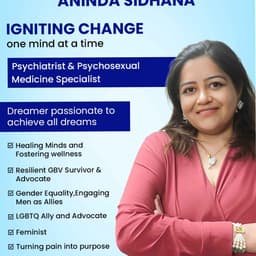
By Dr. Aninda Sidhana
Each month, millions of girls and women experience emotional shifts that are dismissed as “just hormones.” But for many—especially those who are neurodivergent—these shifts are not minor irritations. They are emotional avalanches. And they are happening in silence.
This is a blog about the missing conversation. About PMS and PMDD. About autism masking. About the girls who disappear from diagnosis, care, and compassion. And about why it’s time we stop losing them.
🔎 PMS & PMDD: Beyond the Stereotypes
Premenstrual Syndrome (PMS) is often trivialized—reduced to moodiness, cravings, or the punchline of a joke. But for some, these symptoms escalate into something far more severe: Premenstrual Dysphoric Disorder (PMDD).
PMDD is a hormone-based mood disorder that affects up to 1 in 20 menstruating individuals. It can trigger:
- Suicidal ideation
- Rage and emotional volatility
- Sensory overwhelm
- Cognitive fog and dissociation
PMDD is not a personality flaw—it’s a neurobiological crisis. Yet most people have never heard of it. And even fewer understand how it intersects with neurodiversity.
🧠 Neurodivergence & Hormonal Sensitivity: A Perfect Storm
For autistic girls and other neurodivergent individuals, hormonal shifts can be especially destabilizing. Their sensory systems are already heightened. Their emotional regulation is often fragile. And their coping strategies—especially masking—begin to unravel during puberty.
Autism masking refers to the learned behavior of “performing normal”—suppressing stimming, mimicking social cues, and hiding distress. It’s a survival strategy. But it comes at a cost.
When hormones surge, masking collapses. Emotional meltdowns intensify. Shutdowns become more frequent. And instead of receiving support, these girls are often punished, pathologized, or ignored.
These are the lost girls of autism. Misdiagnosed with anxiety. Labeled as defiant. Told to “try harder.” Their autism remains undetected. Their PMDD remains untreated. Their pain remains invisible.
🌀 Introducing Healcycle: A Tool for Emotional Literacy & Hormonal Awareness
This is where Healcycle steps in.
Healcycle is a trauma-informed, neurodiversity-affirming tool designed to help individuals track their emotional rhythms, hormonal shifts, and sensory thresholds. It’s not just a mood tracker—it’s a self-awareness companion that bridges the gap between biology and psychology.
Here’s how Healcycle helps:
- 📊 Pattern Recognition: Users can log emotional states, sensory triggers, and cycle phases to identify recurring patterns.
- 🧘🏽♀️ Regulation Strategies: Healcycle offers personalized prompts and grounding techniques tailored to neurodivergent needs.
- 🧠 Psychoeducation: It demystifies PMS, PMDD, and neurodivergent presentations through accessible, affirming content.
- 🧩 Masking Awareness: It helps users notice when they’re masking and gently guides them toward authentic expression.
- 🌍 Community Integration: Healcycle is designed to be used by individuals, clinicians, educators, and caregivers—building a shared language of emotional literacy.
For many, Healcycle becomes a mirror. A map. A lifeline. It validates what was once dismissed. It makes the invisible visible. And it empowers users to advocate for themselves in systems that often fail to understand them.
💡 Listening to Moods: A Clinical and Cultural Imperative
As a psychiatrist specializing in trauma-informed, gender-sensitive care, I’ve witnessed how menstrual mental health is routinely sidelined. Emotional distress is pathologized without context. Neurodivergence is missed because it doesn’t “look like autism.” Hormonal symptoms are trivialized as “PMS.”
But when we listen to moods—track them, validate them, and contextualize them—we begin to see the full picture.
We see the autistic teen who spirals every 28 days, not because she’s unstable, but because her hormones hijack her sensory system.
We see the woman misdiagnosed with bipolar disorder, when her rage and despair are cyclical and hormonally driven.
We see the need for tools like Healcycle that help individuals track emotional patterns, regulate symptoms, and reclaim agency.
We see the urgency of integrating menstrual health into mental health frameworks, especially for neurodivergent populations.
🌱 Reimagining Menstrual Mental Health: A Global Imperative
This is not just a medical issue. It’s a feminist issue. A neurodiversity issue. A human rights issue.
We must:
- Integrate menstrual mental health into adolescent care, sex education, and psychiatric training
- Develop diagnostic frameworks that reflect gendered and masked presentations of autism
- Build trauma-informed, culturally grounded tools that honor lived experience
- Normalize emotional literacy as a vital sign—not a weakness
Because when we validate hormonal distress, we don’t just treat symptoms—we restore dignity.
🔑 The Core Truth
PMS and PMDD are not “just in your head.” They are deeply biological, psychological, and social phenomena. And when they intersect with neurodivergence, they demand nuanced, compassionate, and systemic responses.
Let this be the beginning of a new conversation—one that sees the lost girls, hears their pain, and builds systems that never let them disappear again.
- Girl Power
- Human Rights
- Our Impact
- Stronger Together
- Global