
The Earth My Childhood Ran On
May 4, 2026
story
Seeking
Encouragement

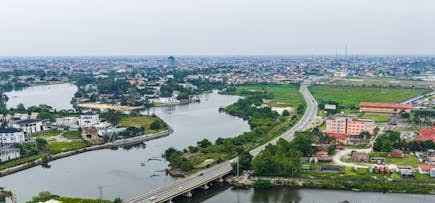
An arial view of Port Harcourt
I miss the barefoot on sand that no longer exist.
I miss the beach we never knew was a beach..
My father knew the trees and what they could do...
The Earth My Childhood ran on.
While growing up we lived in different area but there was one, so beautiful to my eyes as a child and it was called Amatari Polo, at Okrika Waterside in Port Harcourt.
It was called "waterside" because of the wide stretch of sand-filled land and the river close by. As children, we left our homes freely and moved toward a place we called the jetty — where local boats arrived from other Okrika villages, because water transport was one of the major ways people moved around then.
I loved that place. The white sand was vast and open. Looking back now, I realise that if it existed today in that form, people would probably call it a beach. To us, it was simply where we played. We ran barefoot on the sand, felt the warmth of the earth, and stayed close to the river without fear.
Back then, the river was also our major source of sanitation. Most homes did not have toilets. Instead, wooden planks and plywood were built into narrow passages and small shaded structures directly over the water. To use the toilet, you walked along these planks to the jetty. There were separate paths for children and adults.
Looking back now, I understand what this meant for the river's health, for the fish, the water, the ecosystem downstream. But as children, we only knew routine. We did not see the damage we were part of.
We are water people especially in the South-South, where fishing shaped our identity and daily survival. Life felt peaceful then. People slept outside at night without fear. The environment felt calm, safe, and alive. The land and the river were deeply woven into how we lived — not as resources to be extracted, but as neighbours to be lived alongside.
And the land gave us more than beauty. Growing up, the trees around our home were our medicine. My father knew this instinctively. He would peel back the bark of certain trees, steep the leaves in hot water, and make us drinks that healed what they were supposed to heal — quietly, without fuss, the way traditional knowledge works when it has not yet been forgotten. We did not call it herbal medicine then. We simply called it what Papa made when you were sick.
Outside, okra and fresh vegetables grew close enough to pick without going far. The earth fed us from its edges, generously, without being asked twice.
Then things changed.
T6he government began selling the land. Large areas were sand-filled. What was once a living waterscape, open sand, flowing river, mangrove edge slowly disappeared beneath buildings and concrete. A wetland became an estate.
A river became a boundary.
A child's freedom became a story only elders can tell.
And with the construction came other things. The trees that had shaded our homes and stocked my father's quiet pharmacy were brought down, cleared to make way for structures, or cut by families who now needed firewood because the land that once provided everything was being fenced off piece by piece.
The vegetable patches disappeared. The okra we once picked fresh from just outside the door was replaced by what you could buy in the market, if you had the money. The living, edible, medicinal world that had surrounded us simply ceased to be there.
Then came the soot. Dark, heavy, and relentless — settling on rooftops, on walls, on laundry hung out to dry. It came from the illegal burning happening in and around the creeks: crude oil refined in makeshift operations, thick smoke climbing into the air and then descending on everything below.
The sky changed. The air changed.
What had once smelled of river water and earth now carried something sharp and chemical underneath. You got used to it, the way you get used to anything that arrives gradually. But getting used to something is not the same as it being acceptable.
I saw this happen all at once and my beautiful memories i had no longer existed in the way I had held it before i moved to the western path of Nigeria.
Sometimes I miss that warmth, the simplicity, the closeness to nature, the freedom we had as children. But I have come to understand that my missing it is not enough. What we lose to "development" is rarely recovered.
The birds, the water paths, the sand where we ran, the trees my father knew by name, these things do not come back when the concrete is poured. And the communities who lived closest to that land, who needed the river to fish and the trees to heal and the soil to feed them, carry that loss longest and loudest.
Sometimes, what looks like progress from a distance can look like erasure from where we used to stand. That a river is not empty land waiting to be filled. That a tree is not just timber, it is a medicine cabinet, a shade, a breathing thing. That a child's barefoot path across open sand is worth protecting.
The earth I knew was generous, familiar, and deeply woven into everyday life. I want that earth or something close to it to exist for the next generation of children running toward water without fear.
Earth is beautiful.
- Environment
- Climate Change
- Earth Emergency
- Africa