
Telling Our Story from Madagascar to the World Through a Workshop
Aug 11, 2025
story
Seeking
Encouragement

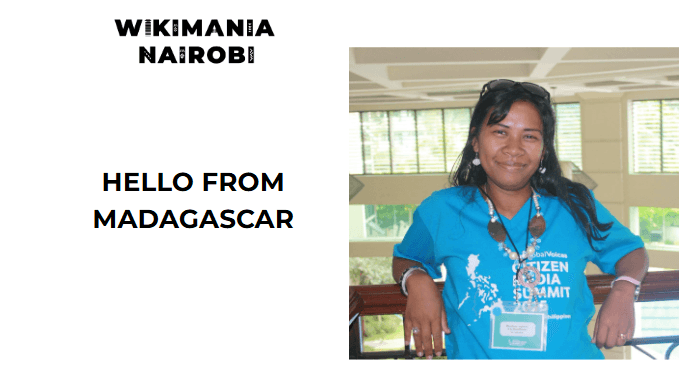
One of my slides during my workshop
This year, I had the opportunity to participate in Wikimania 2025 iin Nairobi, Kenya, not in person, but online, from my home in Madagascar, a country full of vibrant stories, yet often left out of global narratives. I gave a workshop titled “Oru language, our story: practical guide to documentation and sharing”, speaking to people from across the globe about the power and importance of storytelling in underrepresented languages.
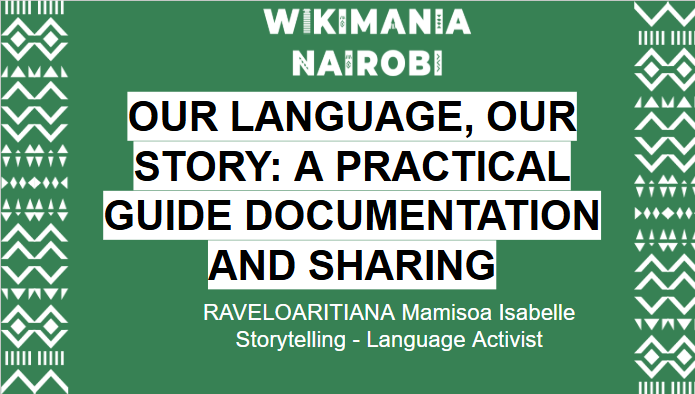
One of my slides(the title of my workshop)
I was nervous. Not just because it was a global platform, but because of the very real possibility that I might lose electricity in the mid-presentation, something that happens regularly in Madagascar. But this fear of powercut doesn't stop me. So I prepared in advance: I recorded my workshop, created slides, and sent them ahead in case I disappeared from the call.
In the end, I was able to connect live. And what a moment it was, not just for me, but for the Malagasy language, and for others who saw that stories from places like mine matter.
After my talk, people sent questions. They were curious, respectful, and genuinely interested in how they, too, could help preserve and share local languages and histories. It reminded me: storytelling is a bridge. It connects our realities, no matter where we are.
What this means to me
In Madagascar, power cuts are daily, internet is fragile, and digital access isn’t a given. But none of that stopped me or so many others from showing up and being part of a global conversation.
I’m also deeply grateful to be part of World Pulse, a community that amplifies women’s voices and stories from around the world.
Sharing our languages and our stories isn’t just about preservation. It’s about visibility. It’s about saying: we are here, we exist, and our knowledge and voices matter.
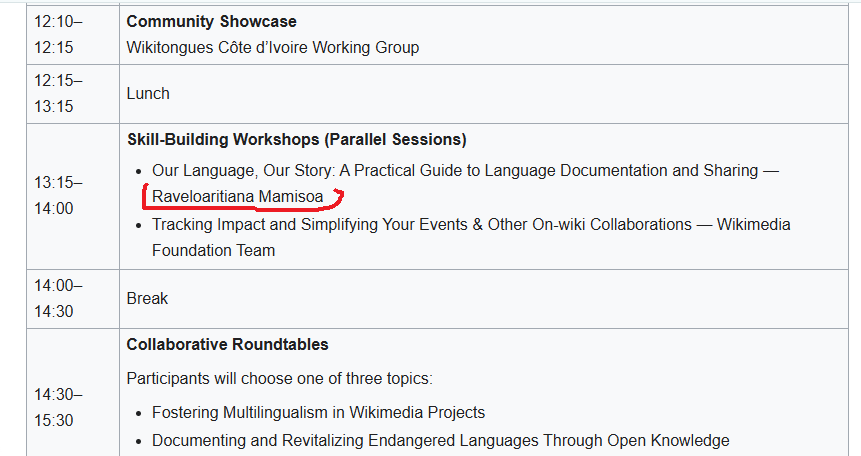
Proud to see my name in the schedule :)
What the world, the international community, governments can do?
Support grassroots digital access. Fund internet access, tech tools, and learning materials for communities facing digital exclusion.
Protect and promote linguistic diversity. Language is knowledge. Help fund documentation and public sharing of endangered or underrepresented languages.
Listen to stories beyond the headlines. Engage with storytellers from the Global South. Our experiences often go unheard, but they carry essential truths.
What can readers, listeners do?
Advocate for digital equity and infrastructure investment.
Call on governments, NGOs, and tech companies to invest in reliable electricity and internet access for marginalized communities. No one should be excluded from global conversations because of where they live.
Elevate and engage with storytellers from the Global South.
Follow, share, and collaborate with creators, scholars, and activists working in and for underrepresented communities. Listening to local voices helps shift power and reshape global narratives.
Wikimania 2025 reminded me that even in uncertainty, preparation, passion, and community can carry a story across borders. I told the story of my people and I was heard.
We don’t need perfect conditions to tell our stories just the determination to be heard, and the support of a global community that listens. My experience at Wikimania 2025 showed me that even with challenges, our voices can cross borders, shift narratives, and inspire action.
Let’s keep building those bridges: one story, and one connection at a time.
- Education
- Technology
- Internet Access
- Indigenous Rights
- Behind the Headlines
- Training - Basic Digital Skills
- Global