
“Peace Beyond Silence: A Mother’s Reflection from Cameroon”
Sep 29, 2025
story
Seeking
Encouragement


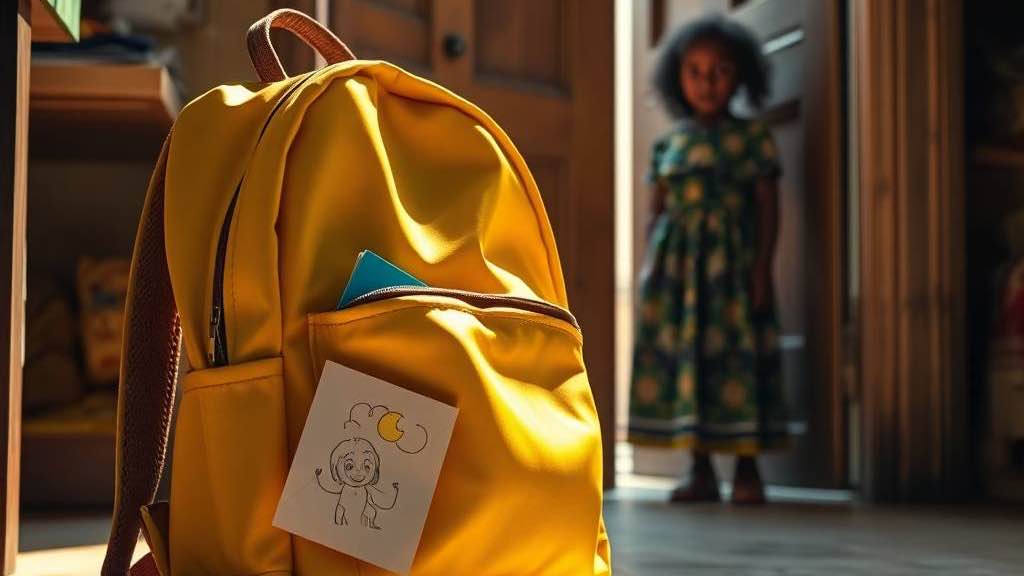
Photo Credit: Ai created by Ekwopi
“Peace is not just silence after gunfire. In Cameroon’s Anglophone regions, peace is the sound of a school bell, the safety of a market, and a child sleeping without fear.”
I used to believe peace was quiet. It was the routine, the feeling of certainty.
I taste it each night when my daughter falls asleep without fear. Her breathing is steady, her small body curled into the blanket, and for a moment my heart is still. That is my emotional peace: the relief of knowing she is safe, even if only for tonight. Practically, peace is when the streetlights come on, when the school opens on time, when there is food on the table, and when neighbor's trust each other enough to share salt and stories.
But in my country, peace is under siege. In the Anglophone regions of Cameroon, the crisis has stolen the rhythms of daily life. Schools have been shut down for years. Many children know the sound of gunfire more than the sound of a school bell. Families live in constant uncertainty: one day a market is open, the next day it is closed by violence. Weddings, funerals, and even farming are lived in fear of raids or clashes.
I remember the day the market near our neighborhood was shut down after clashes at a checkpoint. Vendors rushed to pack their goods, children clung to their mothers’ wrappers, and the air was thick with the smell of diesel and panic. In the space of one afternoon, livelihoods vanished, and the fear of violence lingered long after the shouting stopped. That day reminded me that peace is not abstract—it is bread on the table, medicine in the clinic, and dignity in the streets.
My understanding of peace changed during a turning point a few years ago when a close friend’s family had to flee their home overnight. I watched as the mother gathered two small bags of essentials, but when her young daughter reached for her yellow school backpack,
She snapped, “No Ana”, the sound loud and harsh in the tense silence of their kitchen. She reached out and pulled the bag off her back, letting it drop to the floor. "We don't have time for books. We take the water, the medicine. We go."
I saw the profound betrayal and confusion in her eyes. It was not the fear of running, but the shock of seeing her mother dismiss the tools of her life her education, her dreams as disposable weight.
They had no time for dreams; only for survival. That entire life built over decades was reduced to what could be carried. Until then, I thought peace was simply the absence of gunfire. But that night I realized it is also the ability to plan tomorrow, to dream of next year, to believe that your children’s future will not be stolen in a single day.
The crisis has placed a heavier burden on women. Mothers stretch one meal to feed many mouths, young women are forced out of school, and grandmothers walk long distances for water when displacement camps lack resources. Women are also at risk of harassment and violence at checkpoints. Yet even under these conditions, women lead. They organize food sharing, teach children informally when schools are closed, and mediate community disputes before they turn violent. Their leadership is the hidden strength holding our communities together.
If I could speak directly to global leaders, I would ask three things:
1. Invest in women-led peace-building. Women know the realities on the ground and often carry solutions ignored at higher levels.
2. Fund education and healthcare. Peace requires more than the silence of guns; it needs schools that open every morning and clinics that can heal.
3. Hold perpetrators accountable. Lasting peace cannot grow where injustice is ignored. Without accountability, wounds only deepen.
These are not luxuries; they are necessities. They are the foundation on which families like mine can stand without trembling.
I return to where I began—with my daughter asleep beside me. I want her to grow up in a world where peace is not fragile, where it does not depend on luck, but is built into every system that surrounds her. I want her to know peace not only as silence after conflict, but as justice, opportunity, and the freedom to carry her own school bag.
Peace must not be a privilege. It should be the daily bread of every family, every woman, every child. That is the peace I dream of, and the peace I will continue to work for
#PeaceBuilding #HumanRights #VoicesForPeace #JusticeAndPeace #GlobalSolidarity
#Anglophonecrisis
- Peace & Security
- Gender-based Violence
- Education
- Human Rights
- Peace Building
- Peace Is
- Global