
Ninety Standing Ovations: A Climate Coach's Guide to Not Letting the Planet Die
Nov 24, 2025
update
Seeking
Visibility


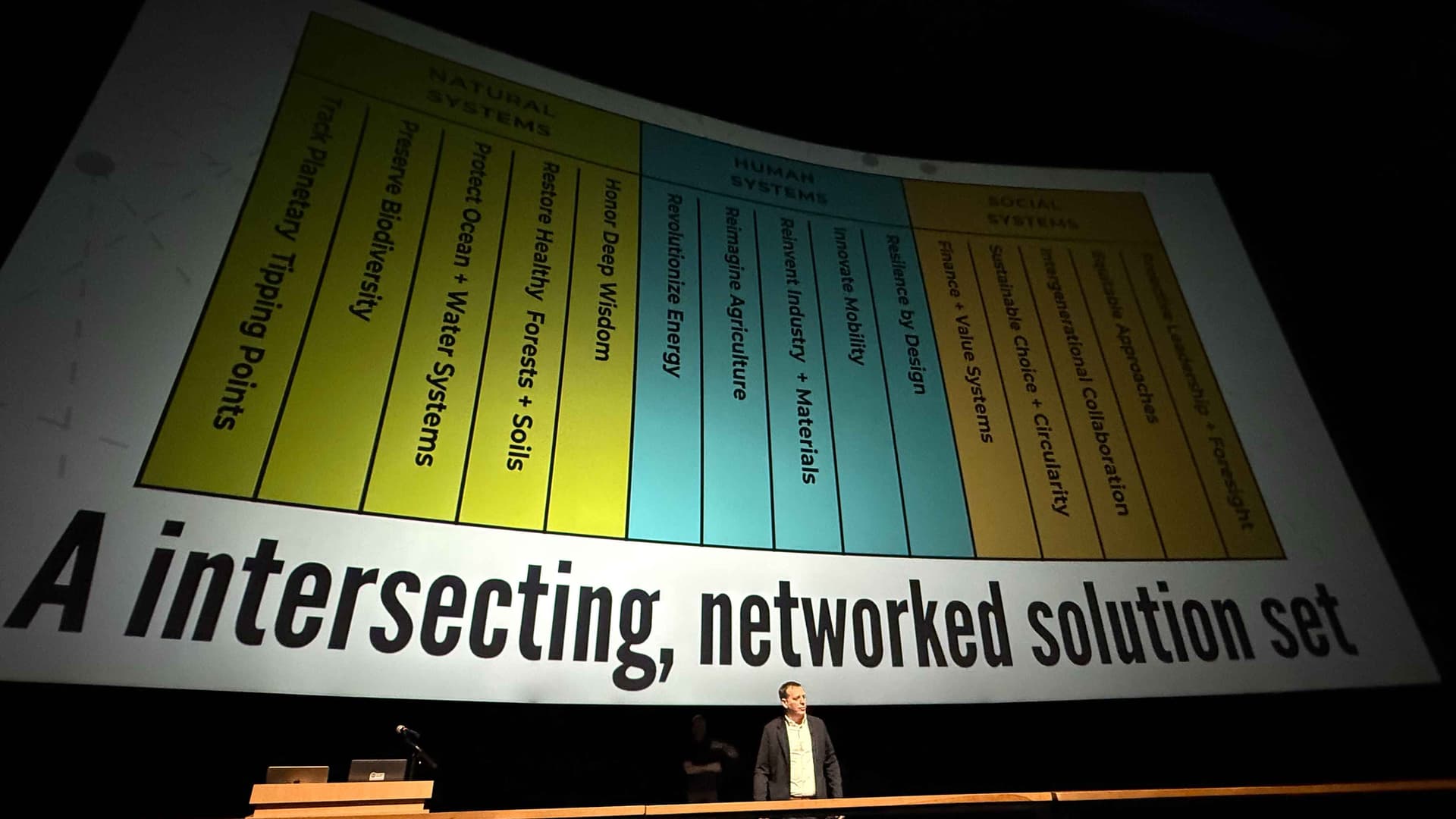
I gave ninety standing ovations in three days. By day three, my quads were threatening to unionize. My knees held a town hall. My lower back filed for divorce. But I kept standing because apparently that's what you do when someone explains how to save the world—you risk your own musculoskeletal system in solidarity.
Here's what nobody tells you about coaching speakers for TEDxBoston: you can't just whisper "be authentic" and then go get a sandwich. That would be lazy, delicious, but ultimately unhelpful. No, as a climate coach—a job description that makes my dentist ask, 'But what do you actually DO?'—my actual role was human defibrillator. Shock people back to life right before they walk onstage, then leap up the moment they finish, applauding like my standing ovation might personally restart the North Atlantic Jet Stream.
The Inflection of Intelligence
We were honored to host a of Xeptional lineup of visionaries, researchers, and industrial leaders who shared their insights on climate solutions.
The Setup
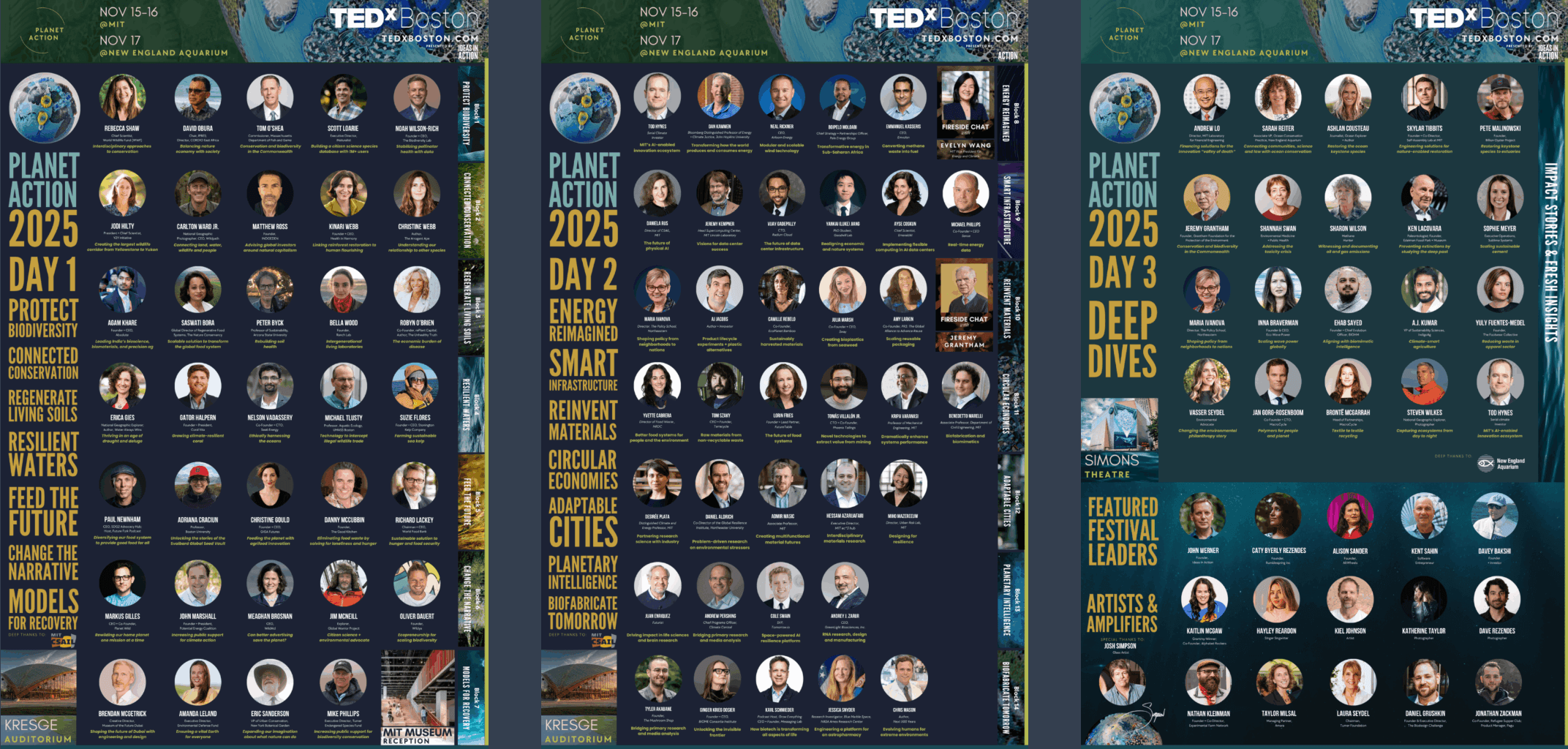
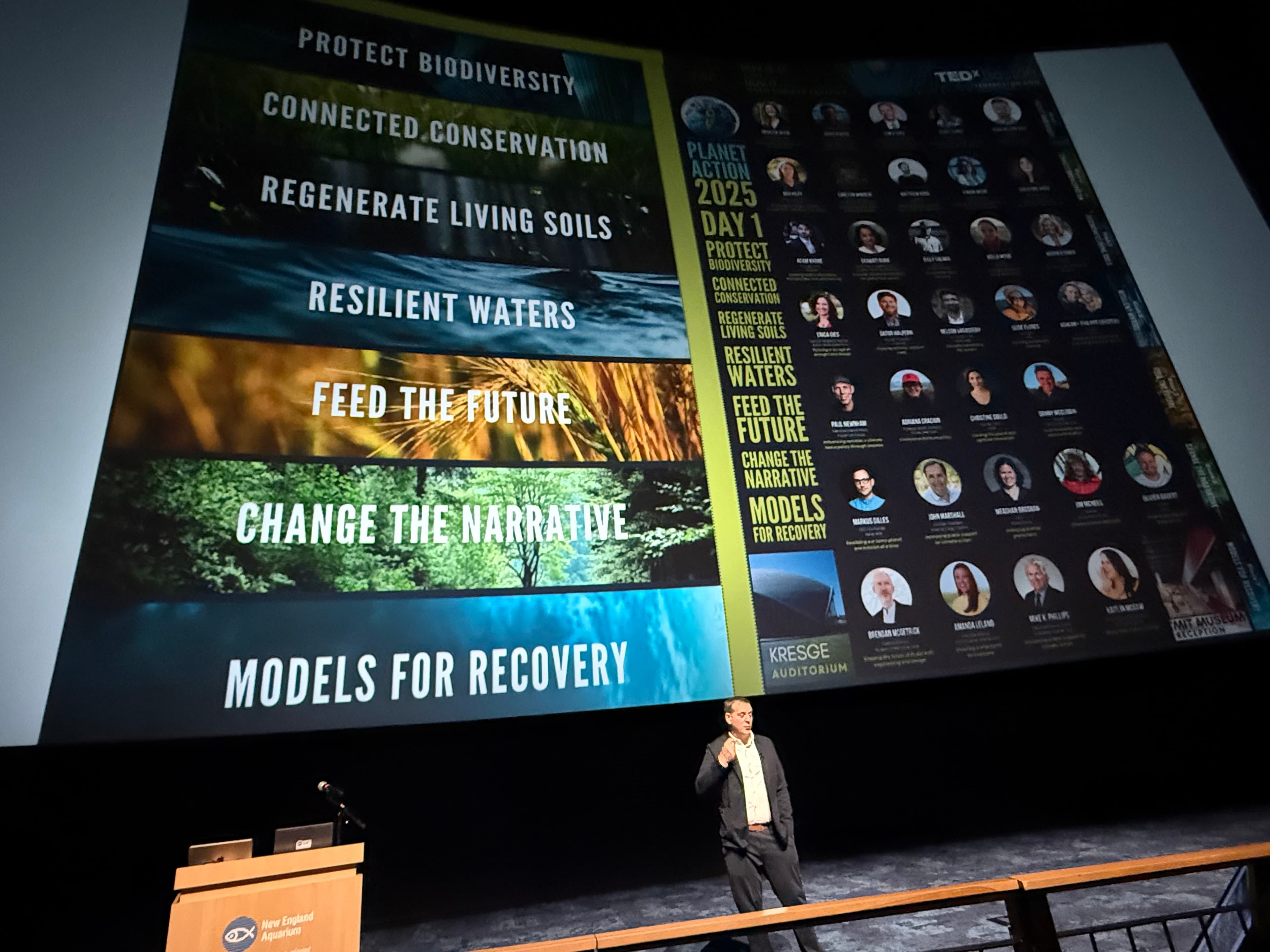
Seventy-five TEDx talks over two days at MIT Kresge. Fifteen Impact Stories at the New England Aquarium where judgmental fish watched everything. Five recording studios running simultaneously. One hundred percent volunteers. Zero percent of us certified in whatever this was.
The math was deranged. But so is climate change, so we were just matching energy.
The Grounding
"Grounding" sounds mystical until you realize it means looking a brilliant scientist in the eye and saying, "Your carbon capture research could save coastal cities, but first you need to unclench your jaw before you chip a molar on stage."
Every speaker arrived identically: terrified, brilliant, convinced they were about to humiliate themselves in front of people who understand photosynthesis means at parties. My job? Remind them that ten minutes is long enough to change someone's mind but short enough that if you panic, it'll be over before you fully die.
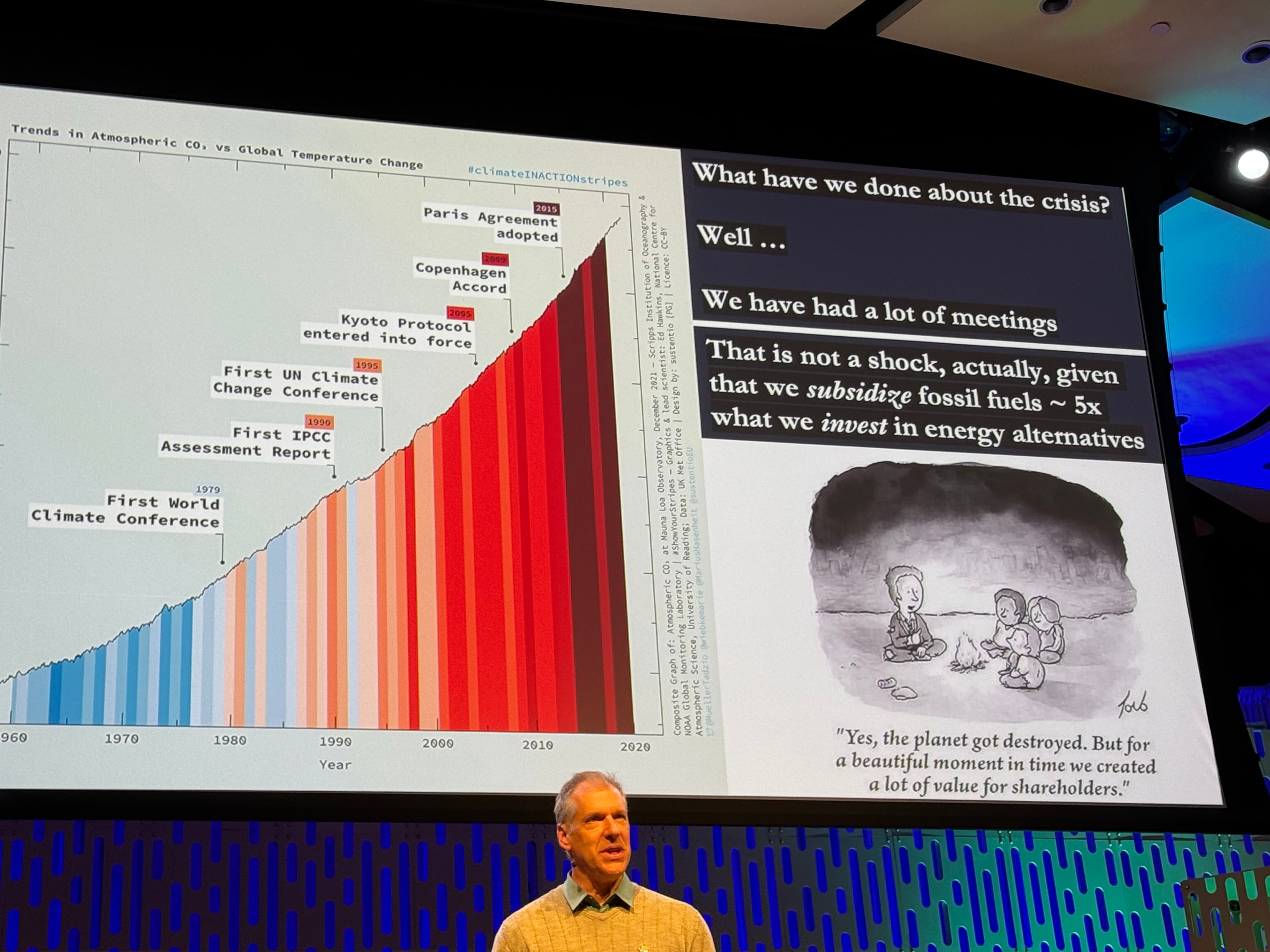
I'd ask: "Why does this matter to you?"
And they'd transform.
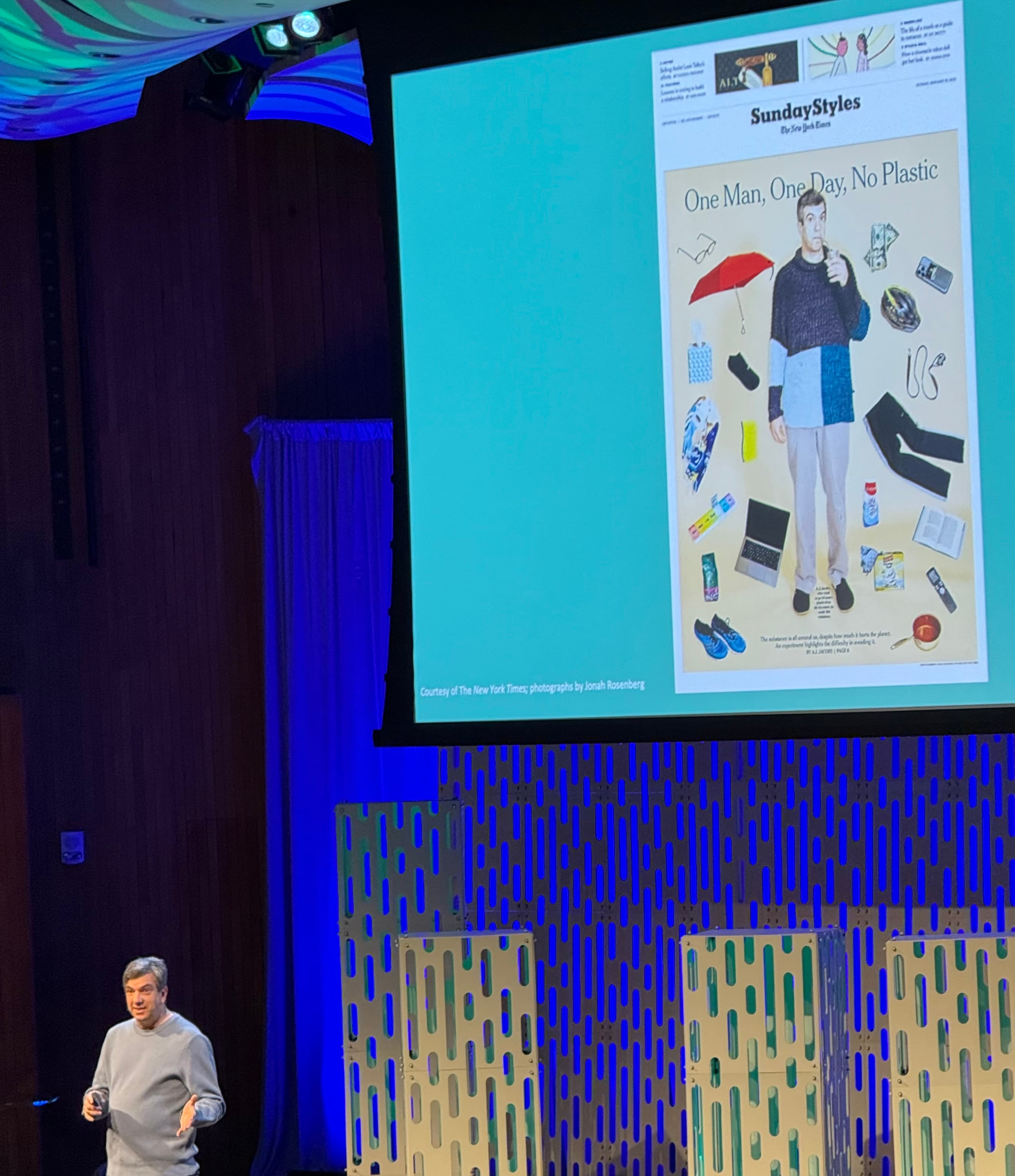
The journalist who survived a 24-hour plastic-free day—and logged 164 violations—stopped apologizing for being essentially a walking Tupperware container.
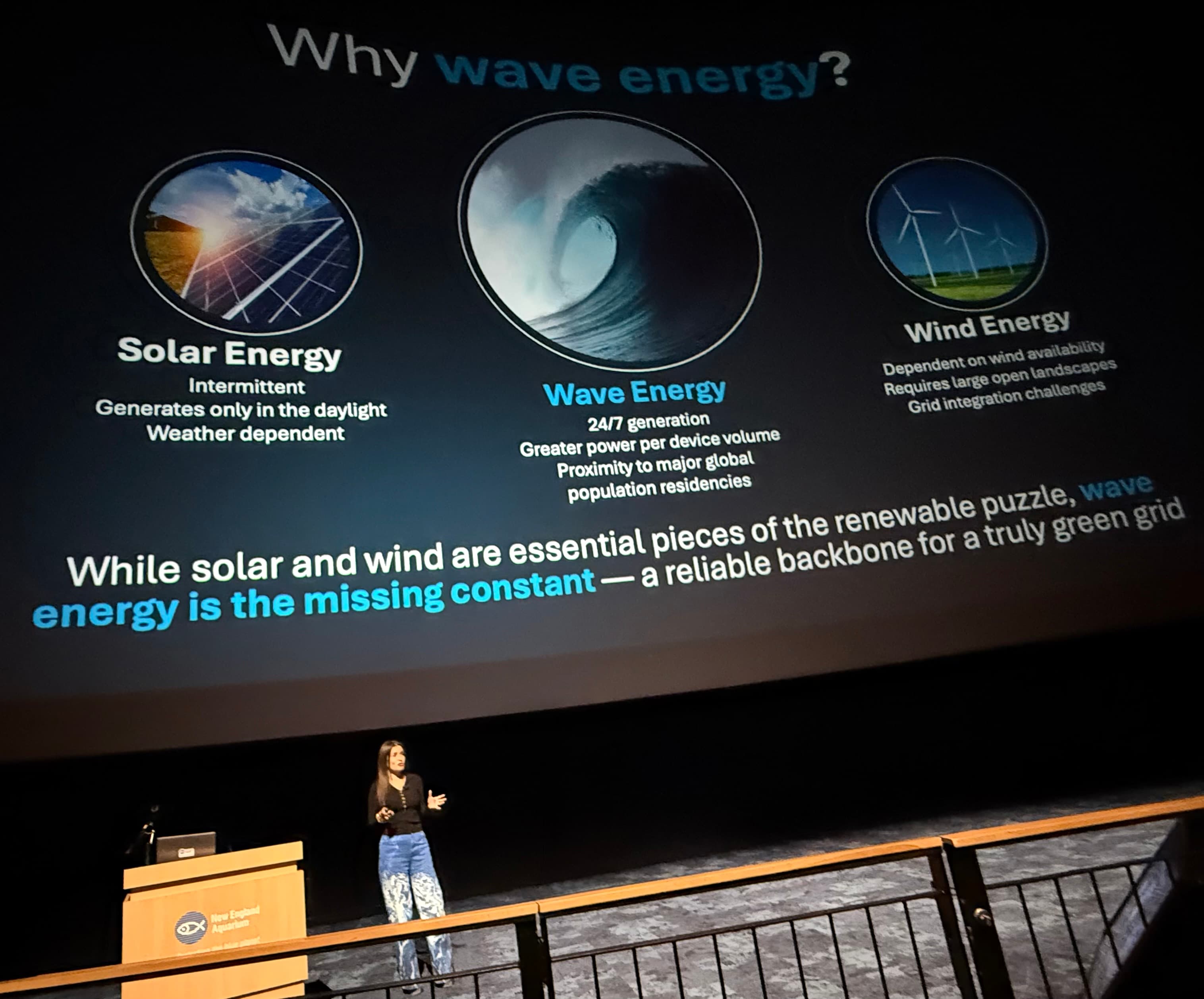
The grad student converting waves into renewable energy dropped the "I'm just a regular person" routine and owned being a revolution in chill wave jeans.
That's grounding. Getting someone to remember they're not performing—they're testifying at the trial of civilization.
The Standing Ovations
Here's the thing: the first standing ovation is sincere. The ninetieth is a spiritual practice in praise.
By day two, my body staged a revolt. "We're sitting," my knees announced. "This is ridiculous."
"Get up," I told them. "That marine biologist just explained how kelp forests could sequester carbon while feeding communities, and if you don't stand, you're part of the problem."
My skier knees stood. Reluctantly. Loudly. With audible creaking that the front row definitely heard sounds like a haunted ship. A woman in the third row looked concerned. 'I'm FINE,' I mouthed, while internally my joints were writing their resignation letters. But that marine biologist had just solved food security AND carbon sequestration with KELP, so my knees could suck it up.
Every single speaker earned it. Not for being perfect—several forgot lines, one accidentally swore, another cried (in a good way)—but for showing up with solutions when the easiest thing in the world is doomscrolling into oblivion.
Watch a room full of scientists awkwardly applaud each other, then watch them realize halfway through day one they're not competitors—they're co-conspirators. By day three at the Aquarium, a soil scientist was collaborating with a wave energy engineer while sea turtles photobombed Impact Stories. The planet was literally and metaphorically in the same room.
The Wobble Is Everything
Every speaker had a moment where their voice cracked, hands shook, or they paused too long. Audiences think that's a mistake. I know it's the moment you stop performing and start meaning it.
One speaker—a guy who designed an affordable water filtration system—completely lost his place mid-talk. Silence. I could feel the audience holding their breath. Then he looked up: "Sorry, I just... this system could help millions of people and sometimes I forget that's not normal to think about."
The place erupted. That's not a flub—that's a human admitting the stakes.
What We Actually Did
John Werner, Caty Baiada-Renzendes, Davey B and the entire volunteer team didn't put on a summit. Summits are suits discussing frameworks. Collectively and voluntarily, we put on TEDxBoston—a gathering of ninety people who've actually built stuff, done the work, have receipts, and can prove that saving the planet while improving everyone's life isn't utopian. It's engineering.
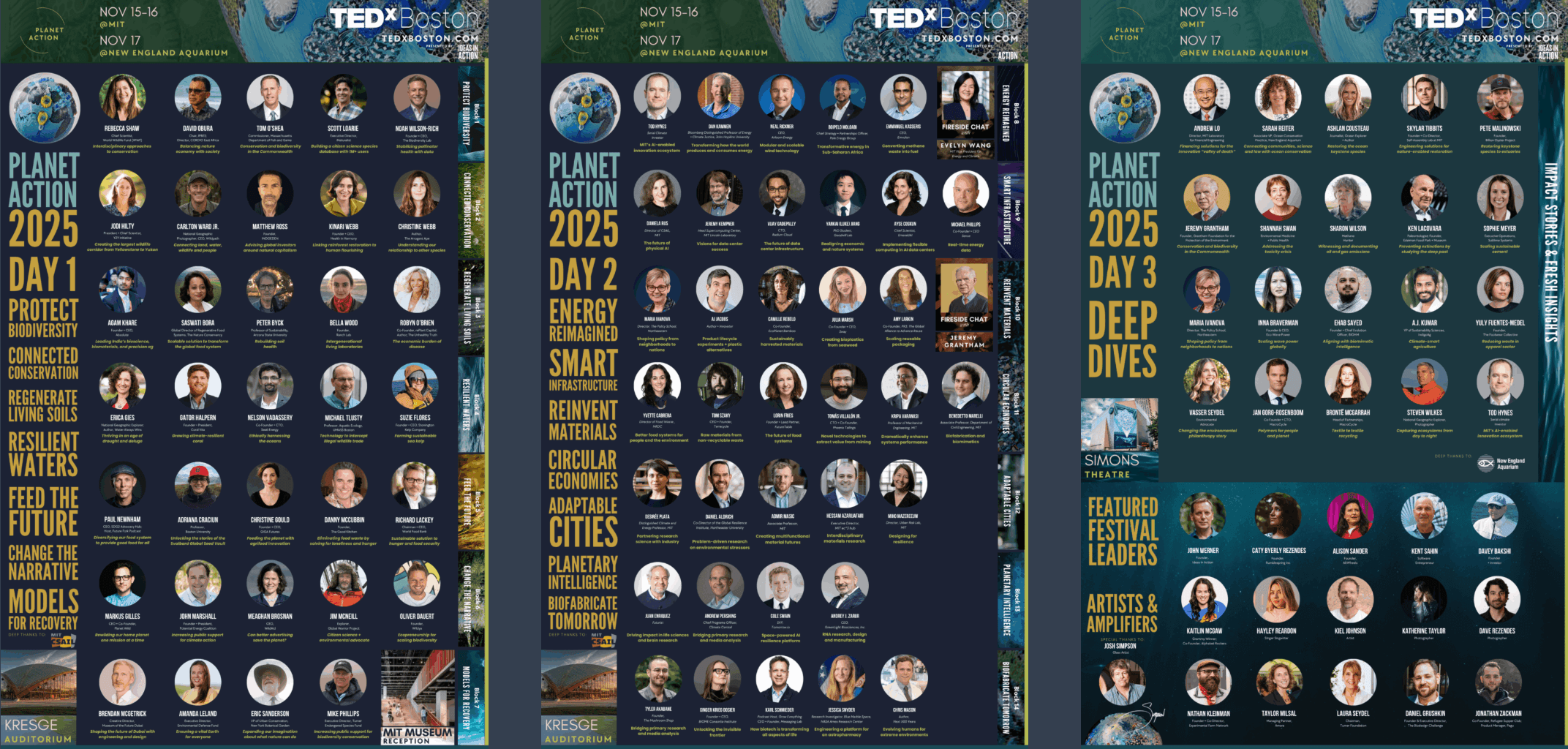
The team created what the feedback form generously called "serendipitous hyper-immersion"—event-planner code for "we threw every good idea at the wall plus excellent snacks." Verbal, audio, visual, edible. If you left without sensory overload, you weren't paying attention.
Plugged IN, Charged UP
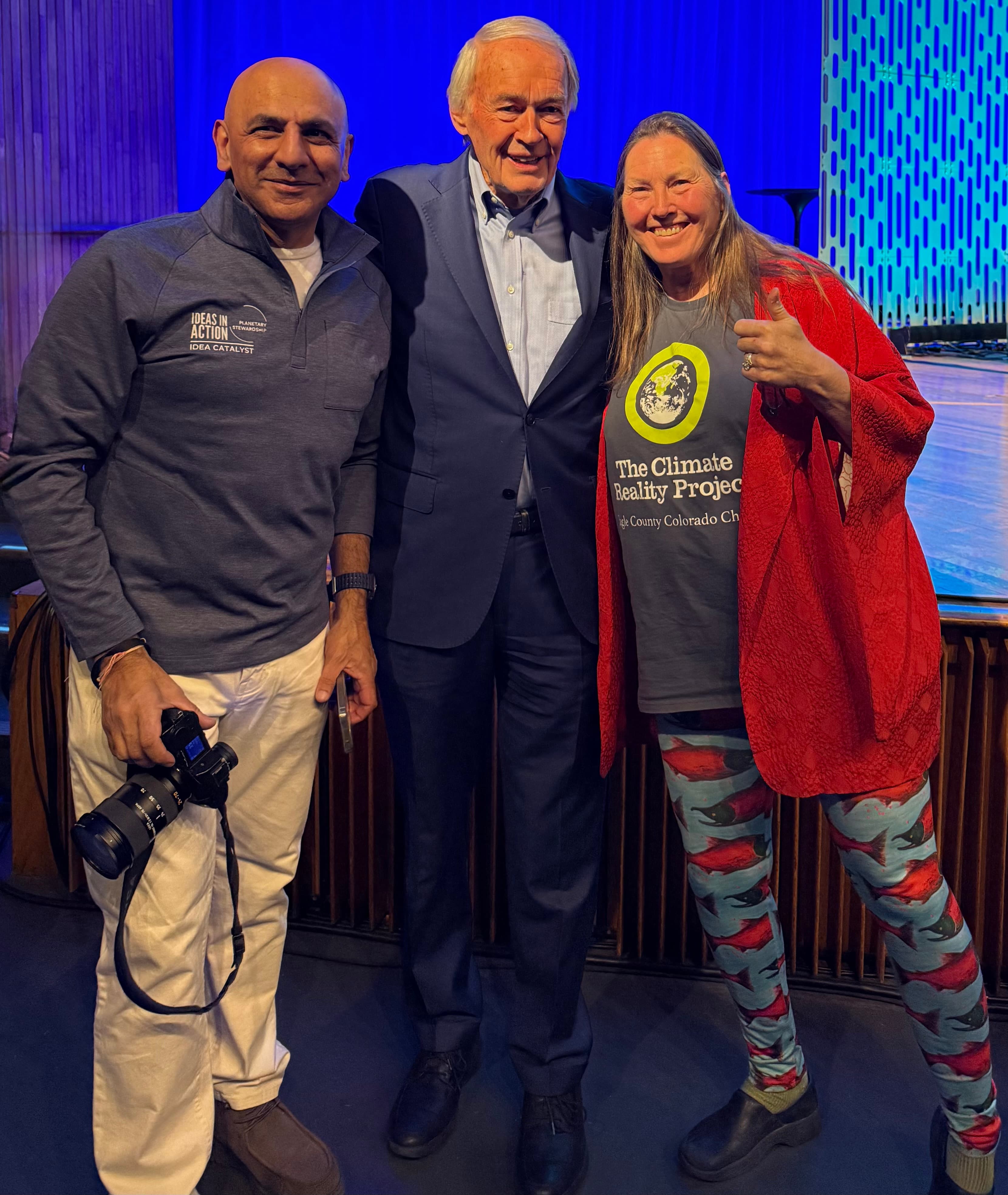
Between sessions, I talked EV road trips with dozens of speakers. I also handed Massachusetts Senator Ed Markey a rock from Grewingk Glacier. "This glacier is receding 98 feet per year,' I told him, watching him hold this piece of ancient ice-carved stone. He looked at it like I'd just handed him evidence in a murder trial. Which, honestly, I had. The murder of glaciers. The defendant? Us. The rock couldn't testify, but it was absolutely snitching. It sat in his palm—small enough to pocket, heavy enough to haunt him—revealing two mountains that used to be hidden, a curving river of prehistoric rock now flowing into a lake dotted with ice-blue icebergs that won't be there in a decade. He didn't put it down." My Plugged IN, Charged UP! journey became this unexpected throughline—a literal destination people wanted to drive toward. Conversations happened in hallways, green rooms, near the aquarium eighty-five foot screen. "Wait, you drove WHERE in an EV? How far? By yourself?" turned into impromptu consultations about range anxiety, charging infrastructure, and whether saving the planet requires giving up road trip snacks. (It doesn't. The snacks are sacred.)
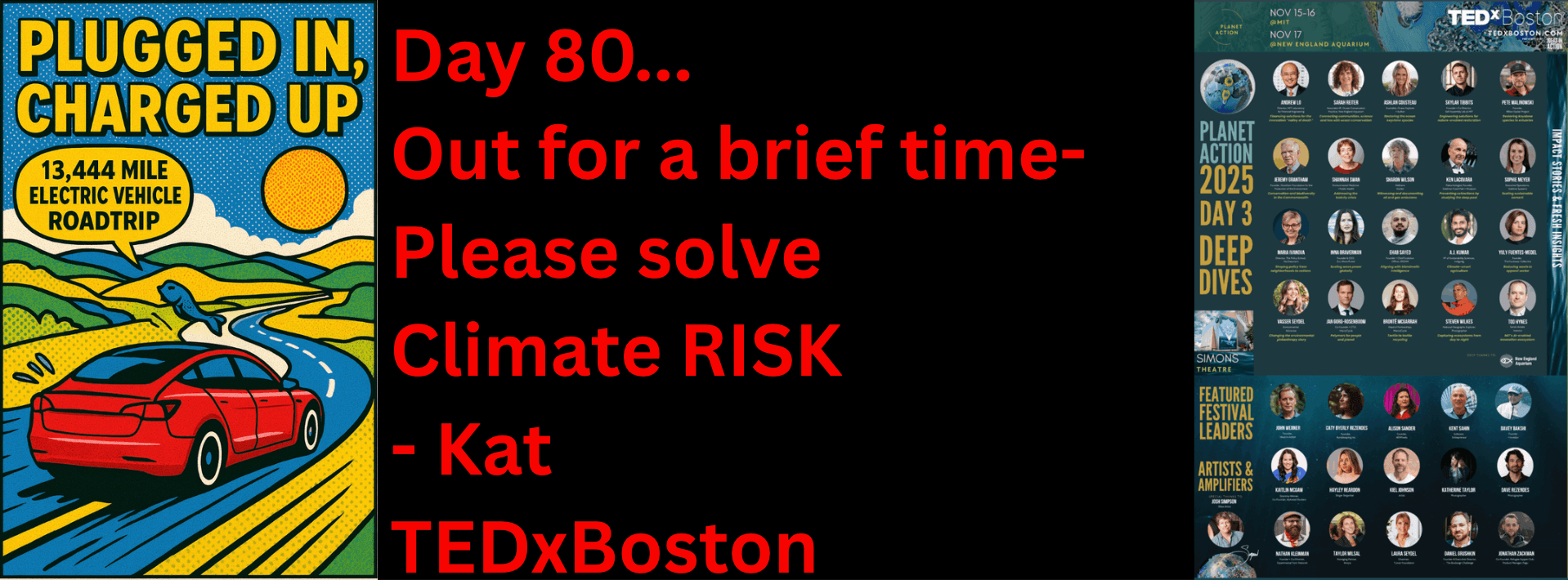
These weren't networking moments—they were "oh, you're also obsessed with practical climate solutions" moments. The EV trip became shorthand for something bigger: proof that climate action doesn't require suffering. It requires engineering, humor, and occasionally talking to strangers about kilowatt-hours while receding glaciers melting into rivers of rock and lakes judge you.
The Bottomline
I'm a climate coach for climate solutions speakers, which means I know that hope is rebellion against despair. Every standing ovation was me saying: "I see you. Your idea matters. Get back out there and save us."
Ninety speakers. Ninety solutions. Ninety reasons to believe we might actually figure this out.
The talks are coming soon. Watch them. Standing optional but highly recommended. Your quads will forgive you.
And if they don't? At least you'll have done your part for the planet while seated, like the morally flexible person you are.
- Leadership
- Peace & Security
- Earth Emergency
- Indigenous Rights
- Peace Building
- Climate Change
- Impact Lab
- Global