
From Governance to Leadership: Lessons from the Field on Breaking Barriers
Jan 28, 2026
story
Seeking
Visibility
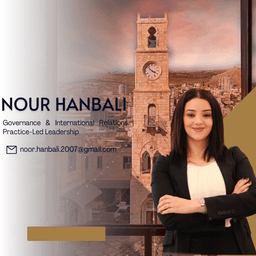

In the world of governance and public leadership, the ability to navigate complex challenges is not just a skill—it’s a necessity. Throughout my career, I have worked at the intersection of governance, strategy, and international relations, bridging policies with real-world impact. From conducting a gender audit in a Palestinian municipality to leading women’s leadership programs in London, I have seen firsthand what it takes to drive meaningful change.
One of the key lessons I’ve learned is that governance is not just about policies—it’s about people. A well-crafted policy can only succeed if it reflects the realities of those it aims to serve. This was evident when I led a Gender Participatory Audit, a process that evaluated governance structures through a gender lens. The findings highlighted the strengths and gaps in ensuring women’s participation in decision-making, reinforcing the need for institutional shifts rather than superficial inclusion efforts.
Similarly, on the international stage, representation goes beyond having a seat at the table. As one of the few Palestinian voices at major global conferences, I understood the weight of my role. Whether speaking at the UN Summer Academy in Germany or leading discussions at U.K. universities on human rights and education, my goal was not just to inform but to engage. I have always believed that leadership is about creating spaces for dialogue, even in environments where perspectives are deeply polarized.
My experience has also shown me the power of adaptive leadership. Leading the Women in Action program in London, I saw how storytelling, interactive debates, and theater-based education could transform complex discussions about human rights into compelling and actionable narratives. When we empower people to connect with an issue on a personal level, they become more than participants—they become advocates.
For governance to be effective, it must be inclusive, strategic, and adaptable. It requires leaders who are willing to challenge the status quo while building bridges across diverse perspectives. Whether working with municipalities, international organizations, or academic institutions, my approach has always been the same: policies must translate into impact, and leadership must be about action, not just authority.
As we look ahead, the challenge is clear: How do we ensure that governance is not just reactive but forward-thinking? The answer lies in the ability to merge policy expertise with human-centric leadership—a skill that every leader, regardless of geography, must cultivate.
10 Leadership Lessons from a City of Resilience: What Nablus Taught Me
Nablus, a city at the crossroads of history, conflict, and diplomacy, offers invaluable lessons in leadership. Having worked in municipal governance and international relations, I have witnessed firsthand how leadership in challenging environments requires adaptability, resilience, and vision. Here are ten leadership lessons inspired by my experiences in Nablus.
10. Leadership Thrives in Crisis
Nablus has faced political turmoil, economic instability, and infrastructural challenges. Yet, its municipal leadership has repeatedly found ways to sustain services, rebuild communities, and maintain international partnerships. Effective leaders do not wait for stability; they lead through crisis, making tough decisions that ensure long-term survival.
9. Resilience is the Foundation of Progress
Resilience is not just about enduring hardship—it’s about transforming obstacles into stepping stones. The city’s ability to withstand occupation, resource scarcity, and economic shifts is a testament to how communities can continue to grow even under pressure. As a leader, the ability to bounce back and innovate under constraints is crucial.
8. Diplomacy is an Essential Skill
In my role, I engaged with ambassadors, international donors, and city representatives. One lesson stood out: diplomacy is not just for politicians; it is an essential leadership tool. Whether negotiating resources for local projects or fostering international partnerships, the ability to communicate and compromise is vital.
7. Local Problems Require Local Solutions
While international organizations often provide aid, real solutions must come from within. Municipal leaders in Nablus have developed self-sustaining initiatives such as community-led waste management and urban renewal projects. Effective leaders understand that external support is useful, but long-term change requires local ownership.
6. Storytelling Shapes Perception
Perception can make or break leadership. When I represented Nablus at international conferences, I realized that how we tell our story matters. Leaders must craft compelling narratives that highlight both achievements and challenges to engage stakeholders and inspire action.
5. Innovation Can Overcome Scarcity
Scarcity of resources can stifle progress, but innovation can counteract it. When faced with infrastructure limitations, Nablus turned to smart urban planning, relying on alternative energy sources and water recycling programs. Great leaders recognize that constraints are an invitation to innovate.
4. Women’s Leadership is Transformative
Leadership structures in historically patriarchal societies are shifting, and Nablus is no exception. Women leaders have driven crucial municipal projects, proving that inclusive leadership leads to sustainable progress. In governance, embracing diverse voices enhances decision-making and community trust.
3. International Relations Start Locally
Sister city agreements and municipal partnerships have allowed Nablus to connect with cities across Europe and the U.S. These relationships foster economic opportunities and cultural exchange. Leaders who think globally but act locally create lasting impact beyond their immediate environment.
2. Sustainable Development is More than a Buzzword
While attending the UN Summer Academy, I spoke on the importance of sustainable development in conflict zones. Sustainability in governance means planning beyond immediate needs, focusing on projects that will benefit future generations while being adaptable to unforeseen challenges.
1. Leadership is About Service, Not Authority
The most important lesson Nablus has taught me is that leadership is about serving people, not exerting power. Municipal leaders who prioritize citizens’ needs—whether by improving public transport, creating green spaces, or advocating for policy changes—ultimately build trust and drive progress.
Conclusion Leadership is not defined by titles but by actions. From navigating diplomatic challenges to implementing community-driven solutions, the lessons from Nablus provide a roadmap for anyone seeking to lead with resilience, innovation, and a vision for the future.
- South and Central Asia