
From Congress to Sudan Peace is worth living for
Sep 21, 2025
story
Seeking
Visibility


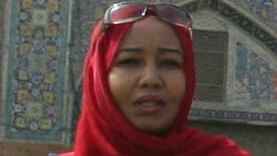
There is currently a bill in Congress to create a cabinet-level Department of Peacebuilding (DoP/ HR 1111) to make nonviolence and building peace a priority in our public policy and decision making.
I watched this debate from afar, from an exile that resembled a bridge between two worlds. I wondered: Can peace become an official institution governed by a budget and laws?
In Sudan, peace was never an institution, but rather a dream scattered in the halls, in the faces of women returning from collecting firewood, and in the eyes of children inside the camps. Here, the stories of Congress intersect with our own stories, those of us who have experienced displacement, asylum, and grave violations, from the war in the south that bled our first memories, to Darfur, which blew up the camps in our consciousness, to the most recent war that made Khartoum a heartless city.
All these wars left behind people clinging to life like straws in a turbulent sea. I heard their voices and recorded their pain until an overwhelming desire overcame me: to write their stories not as victims, but as beacons of possible peace. Hence, my initiative, Noura, was born to combat violence against women. It's a small attempt to restore meaning to a big word, "peace." My story began when...
When I was a budding journalist interning at a newspaper in Khartoum, like many others, I heard that the war in Darfur between armed movements and the government was being waged against women's bodies, and that assaults on women were being used as a weapon to humiliate communities. I silently wondered: Could this be true? Could women's bodies be turned into battlefields?
Unable to accept rumors or reports from international organizations, I decided to travel secretly to the displacement camps. I entered stealthily, hidden among the displaced, carrying a pen, paper, and a camera hidden in a backpack.
There, I saw what changed my life forever:
I saw a number of women and young girls who had gathered ropes and knives, tied clothes around their midriffs, and sat in a small circle on the dry, dusty ground. The sun was beating down harshly on their faces, and the air was dry, as if conspiring with oppression. They raised their hands to the sky in deadly devotion, tears falling silently, leaving thin furrows on faces worn by time. Women and young girls, inside a displacement camp in Darfur.
I stood close to them, observing the scene with eyes filled with confusion. In my backpack, I hid a small camera among scattered papers, a notebook, and a pen. I didn't want anyone to know I was a journalist; I was here not only for the profession, but also because of an inner urge demanding the truth.
I moved closer, my heart pounding. One of them asked in a low voice, "What are you doing? And why are you crying like this?"
A 23-year-old woman raised her head, her eyes sunken in as if they were carrying the weight of the earth. She said, "We're getting ready to leave... We're going to collect firewood to cook for our children. But we know the road could bring us death or something else."
I hesitated for a moment before saying, "But... wouldn't it be better if the men went?"
She answered quickly and firmly: "If they had left, they would have been slaughtered right in front of us."
At that moment, I realized that peace wasn't just a ceasefire. It was a girl being able to return home without her body being used as a battlefield, or losing her husband or father.
Years later, I found myself in Blue Nile State. I was traveling with a journalistic delegation there to report on the stories of those affected by the conflict. I was traveling with a journalistic delegation when the vehicle swerved violently. I shouted at the driver, "You're killing us!" His increasingly agitated response was, "Shut up! If we don't hurry, we'll really die. This area is littered with mines, and this narrow road lined with blue stones is the only one that's been cleared."
After much effort, the government and the armed movement agreed to a ceasefire, and people began to breathe again: children returned to school, women set up small markets, and farmers returned to their land. It was a living lesson: peace isn't a luxury, it's a necessity. Here, I felt that peace simply meant walking a path without fear of a mine exploding beneath you. Peace meant that travel was a normal journey, not an adventure with death.
Years later, in 2020, a peace agreement was signed between the Hamdok government and Malik Agar's armed movement, bringing peace to the Blue Nile region. This fulfilled Christine Carlson's saying: "When you are in touch with your heart, you feel connected to others and access your inner wisdom."
Then, years later,
I woke up to the sound of a hand drum in my head, songs, chants, and the sound of feet stamping the ground inside my house. I ran out, with all my family in my pajamas, to the courtyard of the house. There I found Teresa, our southern nanny, bringing her entire family, her children, and grandchildren, dancing to tambourines and southern rhythms.
That was the day the peace agreement between North and South was signed after 21 years of war by John Garang.
That day, we all danced—we and the neighbors—hugged, distributed sweets and drinks, and cried with joy.
It was a day that brought an end to long-standing misery between North and South Sudan. John Garang's saying came true.
"Peace is not just a signature." On paper, it's a life given to people."
In Juba, the capital of South Sudan, the scene was different.
Guards surrounded us and asked us, the press delegation accompanying the Sudanese Foreign Minister, to wait until South Sudan's President, Salva Kiir Mayardit, arrived so we could meet him. I was extremely nervous; this was the first time I had been able to meet the president of the south before the anticipated secession, and during the preparations for the historic referendum on secession from the north.
The invitation came from the Development Bank to finance projects in the south, following the signing of the Comprehensive Peace Agreement between the north and the south, led by John Garang, who died in a plane crash carrying the dream of peace for his people after a brutal twenty-one-years
We were asked to leave our bags and shoes behind and turn off our phones, as the meeting was solemn. When my turn came and I shook his hand, I surprised him with the question:
"Are you really going to secede? And what will happen to the peace agreement?" And if you cannot stand alone, will you return to Sudan?
There was a brief silence, but the president shook my hand and said seriously,
"Yes, we will separate. The referendum will decide that. But we may return one day." We are now working to implement the peace agreement, so that our people may reap its fruits in development."
I left the meeting recalling God's words to the angels:
"Will You place therein those who will cause corruption therein and shed blood, while we glorify You with praise and sanctify You?" He said, "Indeed, I know that which you do not know."
And I remembered Nelson Mandela's words: "The brave are not afraid to forgive for the sake of peace."
These statements were no longer just words; they were lived experiences. I saw how peace could turn into dancing in a courtyard, into a narrow blue line between mines, and into a bold question for the president of a new country searching for its identity.
And today, years later, the current war has torn Sudan apart once again. I found myself in exile, far from my homeland, trying to restore meaning to life. Through individual effort, I founded the Noura Initiative to combat violence against women. It's not a massive initiative, nor is it supported by major countries, but it's a cry in the face of devastation.
I'm trying to resolve people's problems peacefully, after war has taken their lives and health
Today, after the current war has placed my entire country in exile, I write these lines from afar. I launched the "Nura Initiative to Combat Violence Against Women," an individual effort to try to make a small peace among women whose husbands and relatives have been killed by war, robbed of their health, wealth, and dignity.
We Sudanese have become fuel for a war that does not belong to us. We are ostracized, forgotten, no one illuminates our tragedy, and no leaders care. Nevertheless, I believe that words and individual effort can be the seed of peace.
Peace, for me today, is when a displaced woman laughs as she distributes bread to her children, when a child sleeps without being awakened by the sound of bullets, when a road is cleared of mines, and when a girl in Darfur is not forced to choose between her death or the survival of a man in her family.
I appeal to the leaders of the world, not only as a witness, but as an actor in the cause of peace.
Do not leave us captive to texts written on paper that die in reality. Peace needs to be built as a living institution, with ministries and policies that protect civilians as armies protect their borders. Peace is a right: bread on the table, a roof over your head, and justice that cannot be bought or sold.
If you do not make peace your top priority, history will record that you were witnesses to massacres, not makers of life.
And it's not my white dress
I spun brown wool
And went out to the door of the house
I lit candles of joy, lights
I poured perfume in cups or stages
I heard Beethoven's music
I danced jazz with the brown-skinned
Peace has returned to my country
Despite the walls
And I scattered love on the roads
I gave roses right and left
And played the tune of insistence
No war to devour our memories
Or fire to light our hearth
Or let evildoers enter my house
Rather, I knock on the door of glory
Every day
Rather, I dream of rubies and coral
Rather, I plant lilies
And tenderness
And I say with all pride
I am the lady of this house
My eyes are a sparkle of patience
And my heart is a bundle of moons
https://www.facebook.com/share/r/1BByGHUg9i/
- Disability Justice
- Peace & Security
- Human Rights
- Economic Power
- Gender-based Violence
- Peace Is
- Global