
FEMININE HYGIENE IN PRISONS: THE FORGOTTEN FRONTLINE OF GBV JUSTICE
Dec 10, 2025
initiative
Seeking
Collaboration


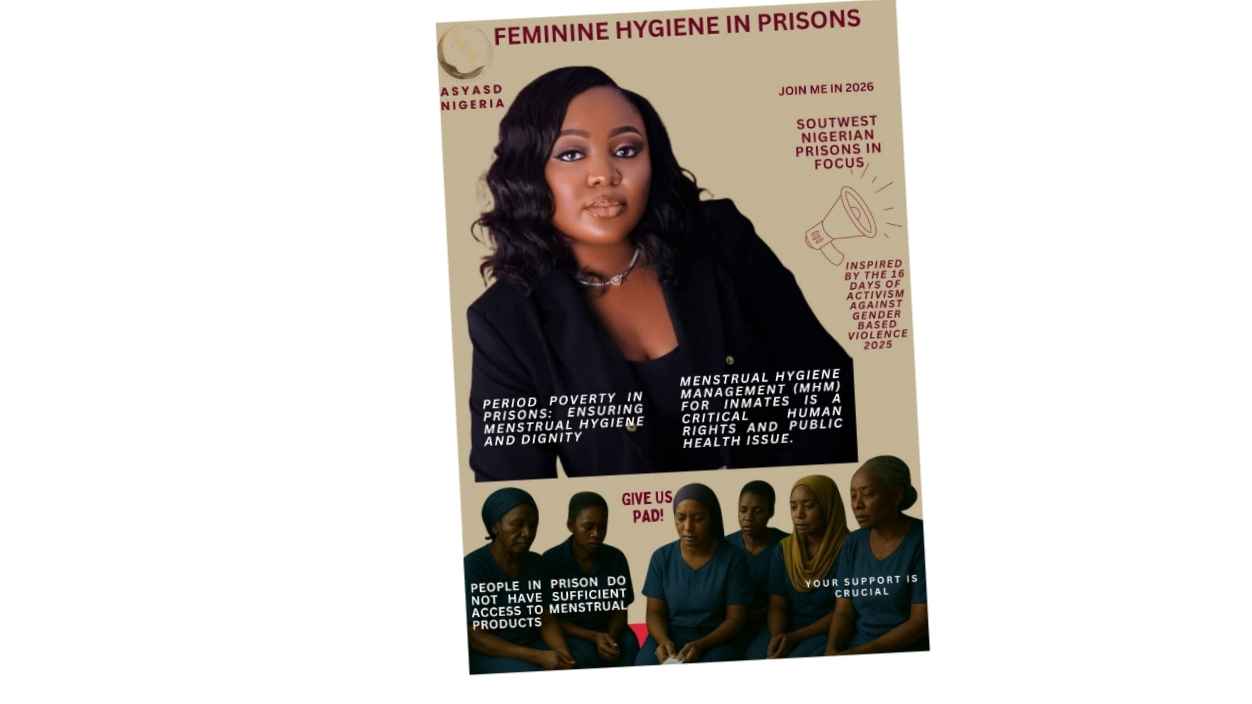
Photo Credit: Dr. Yewande Omikunle, project Advocate
FEMININE HYGIENE IN PRISONS: THE FORGOTTEN FRONTLINE OF GBV JUSTICE
As we round up the 16 Days of Activism against Gender-Based Violence, the message is clear: the work cannot end today. From homes to schools, streets to digital spaces, women and girls deserve safety, dignity, and justice every single day. Let this moment renew commitment to speak out, support survivors, challenge harmful norms, and demand accountability from leaders and institutions. Activism is not just a campaign; it is a daily choice to stand against silence, indifference, and impunity. Together, a world free from violence is possible.
One silent crisis demands urgent attention: menstrual dignity for women behind bars. Across many prisons, women and girls struggle to manage their periods with little or no access to quality sanitary pads, clean water, privacy, or proper disposal facilities, leaving them exposed to infection, shame, and dehumanising conditions. This neglect is not just a health issue; it is a violation of their fundamental rights and a form of structural gender-based violence.
In Nigeria, female inmates, already traumatised by stigma, isolation, and in many cases histories of abuse, must not be further punished by being denied basic menstrual hygiene. Studies from Africa and beyond show that incarcerated women often receive poor-quality products, too few pads to change regularly, and are forced to bleed through their clothes or improvise with unsafe materials. No woman should have to choose between her dignity and her circumstances.
As an advocate passionate about supporting female inmates with sanitary pads and menstrual hygiene in difficult situations, this is a heartfelt call to action. The government must urgently integrate menstrual health into prison standards, budgets, and oversight mechanisms, ensuring adequate supplies, water, sanitation, and privacy for every woman in custody. Civil society organisations and faith-based groups are encouraged to incorporate prisons into their menstrual health programs. At the same time, individuals, philanthropists, and corporate entities can sponsor monthly pad banks and hygiene kits for female inmates.
Ending gender-based violence means addressing every place where women’s bodies and dignity are controlled, ignored, or shamed, including prison cells. Menstrual hygiene is not a privilege; it is a right.
- Health
- Human Rights
- Gender-based Violence
- Global