
CAMEROON: Through Technology, I’m Transforming the Disability Community
Dec 2, 2021
story
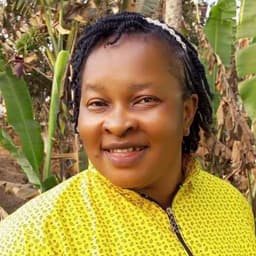

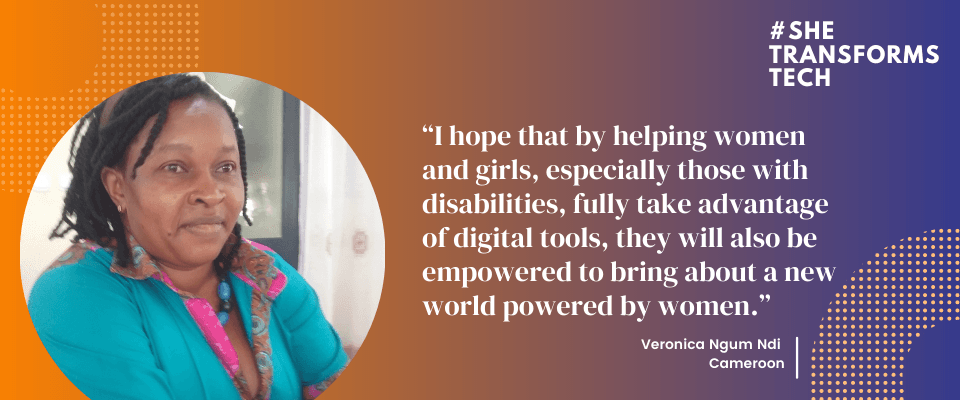
As a woman with a disability, Veronica Ngum Ndi shares how technology has expanded her world and made her passionate about educating others.
I hope that by helping women and girls, especially those with disabilities, fully take advantage of digital tools, they will also be empowered to bring about a new world powered by women.
Throughout my life, I have faced stigma due to my disability. Technology has given me opportunities I never believed I would access in my lifetime just by one click.
My voice is heard from my little corner in Bamenda, North West Region, Cameroon. And through technology, I’m helping ensure other women’s and girl’s voices in my community are being heard, too.
As the CEO and founder of the Community Association for Vulnerable Persons and Co-founder of the Cameroon Humanitarian Women Network, I sensitize women, girls, and communities on the importance of digital empowerment. I identify women and girls in the community and organize trainings on the responsible use of the internet and social media.
I was first introduced to technology through a university computer course where I drafted my first email and signed up for Facebook. That class sparked a limitless passion for empowering myself and growing my digital skills. Since then, the transformation I’ve experienced through technology has enabled me to support others in their transformation.
My fellow sisters with disabilities have little to no access to technology and digital tools. This is often due to barriers generated by stigma, marginalization, and discrimination. They struggle to afford internet access and the opportunity to build their digital skills. Those who have basic online skills sometimes experience online harassment or gender-based violence that scares them away from the digital world.
As a woman with disabilities, I empathize with the numerous barriers women and girls face accessing technology. Due to my income level, I can’t always access the right digital tools or regularly afford the internet. Paying for skills training is expensive and leaves most women and girls behind, especially those with disabilities.
With these barriers in mind, I have recommendations on making technology more accessible for women and girls with disabilities. First, government and internet entities can make the internet affordable or free, with special consideration for those experiencing disabilities. Then they can create supportive access to digital tools for women and girls.
These entities can also support women-led initiatives for women and girls’ digital empowerment in grassroots communities and humanitarian contexts.
My country, Cameroon, is in the midst of a sociopolitical crisis and violent conflict. Women and girls’ mobility is greatly restricted and there is a high prevalence of gender-based violence. I train women and girls to use their digital tools to report all gender-based violence cases. It is important that each instance of violence is known, and digital tools make this data collection more possible.
Technology has transformed me into a role model among women and girls with and without disabilities. They look up to me as a mentor, and I am doing my best to
mentor them. With my ability to use technology and the internet responsibly, I can stay safe online and teach them to stay safe too.
At the beginning of their training, I teach women and girls how to download apps to their Androids and smartphones to benefit their day-to-day living. They can develop professional skills and discover employment opportunities. Later on, I teach them about online networking, e-Learning, and e-Marketing. I share
resources such as scholarships, conferences, and fellowship programs worldwide.
Technology has enabled me to communicate with disabled people I may not have reached otherwise, especially those who are deaf or hearing impaired.
I’ve learned that women and girls with disabilities have limited chances of receiving a formal education and accessing digital tools. We link them to donors and supporters who can offer these tools, and I train them on usage.
Technology allows me to give back to my community and create change that helps lift up women’s voices. I hope that by helping women and girls, especially those with disabilities, take full advantage of digital tools, they will also be empowered to bring about a new world powered by women.
This story was published as part of World Pulse's shetransformstech Campaign and is included in the #shetransformstech final report. Download the report to find out what grassroots women and gender-diverse individuals from 60+ countries say individuals, policymakers, and tech companies must do to make tech equitable for all.
- Disability Justice
- She Transforms Tech
- Africa