
Breaking the silence Around a Growing public Health Crisis
Jan 13, 2026
story
Seeking
Visibility

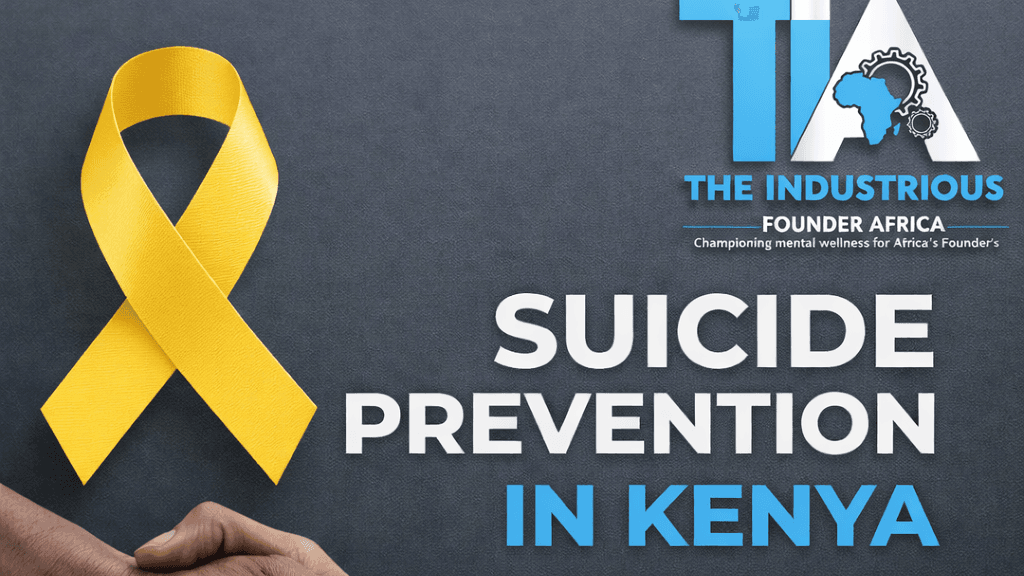
Suicide in Kenya: Breaking the Silence Around a Growing Public Health Crisis
In recent years, Kenya has been grappling with a quiet but devastating crisis one that unfolds behind closed doors, in news headlines, and in grieving homes across the country. Suicide cases have risen steadily, cutting across age, gender, profession, and geography. Yet despite the growing numbers, suicide remains one of the least openly discussed public health challenges in Kenya. Wrapped in stigma, fear, and misunderstanding, many stories end without being fully heard.
Suicide is often misunderstood as a personal failure or a moral weakness. In reality, it is a complex public health issue shaped by mental health struggles, economic pressures, social isolation, trauma, and lack of access to care. Each life lost represents not only an individual tragedy but also a collective failure of systems meant to protect and support human well-being.
Across urban and rural Kenya, families are left with unanswered questions. Parents mourn children they never imagined losing. Children struggle to understand the sudden absence of a parent. Colleagues, neighbors, and friends replay conversations, wondering what signs they missed. The grief is heavy, layered with silence, because many communities still struggle to talk openly about suicide without judgment.
One of the most alarming trends is the high number of men affected. Cultural expectations often teach men to suppress emotion, endure hardship quietly, and equate vulnerability with weakness. As a result, many men suffer in isolation, carrying the weight of unemployment, debt, family responsibility, and social pressure without safe spaces to express distress. When emotional pain goes unspoken for too long, it can become overwhelming.
Young people are also increasingly vulnerable. Adolescents and young adults face a rapidly changing world academic pressure, unemployment, social media comparison, family instability, and uncertainty about the future. For some, these pressures intersect with untreated anxiety, depression, or trauma. Without adequate school-based mental health support or trusted adults to confide in, distress can escalate unnoticed.
Economic hardship plays a significant role in Kenya’s suicide crisis. Rising costs of living, job losses, drought, and business failures have placed many households under immense strain. For individuals who define their worth through providing for their families, financial instability can trigger deep feelings of shame and hopelessness. When survival itself becomes a daily struggle, mental health often takes a back seat.
Substance abuse further complicates the picture. Alcohol and drug misuse can worsen emotional distress, impair judgment, and reduce impulse control, increasing vulnerability during moments of crisis. Yet addiction is still widely treated as a moral failing rather than a health condition, pushing those affected further to the margins instead of toward support.
At the heart of the crisis lies a fragile mental health system. Kenya has made important strides in recognizing mental health as a national priority, but access to services remains limited. Mental health professionals are few, facilities are unevenly distributed, and many communities rely on informal or overstretched support networks. For people in distress, help may feel distant, expensive, or inaccessible.
Stigma remains one of the most powerful barriers. Many Kenyans fear being labeled “weak,” “crazy,” or “cursed” if they speak about mental health struggles. Families sometimes hide suicide cases out of shame, preventing open dialogue and learning. This culture of silence allows myths to persist and prevents early intervention.
Yet amid the pain, there is also movement toward hope. The decriminalization of attempted suicide marked a significant shift in recognizing suicide as a health issue rather than a crime. Community organizations, faith leaders, mental health advocates, and youth groups are increasingly speaking out, creating spaces for conversation, healing, and prevention.
Schools are beginning to integrate mental health awareness programs. Some counties are investing in counseling services and community outreach. Media platforms are slowly adopting more responsible ways of reporting on suicide focusing on prevention rather than sensationalism. These efforts matter, because suicide is preventable when people are supported early, consistently, and compassionately.
Prevention starts with listening. Often, people in distress do not need solutions immediately; they need to be seen, heard, and believed. Simple acts—checking in on a friend, asking sincere questions, offering non-judgmental support can interrupt isolation. Communities that prioritize connection create protective environments where people are less likely to suffer alone.
We must also invest in mental health as seriously as we invest in physical health. This means training more professionals, strengthening community-based services, integrating mental health into primary care, and ensuring affordability. Mental well-being is not a luxury; it is foundational to national development, family stability, and individual dignity.
Suicide is not inevitable. It is not a destiny written in hardship. It is a signal a cry for help that demands collective response. Every conversation that reduces stigma, every policy that expands access to care, and every community that chooses compassion over judgment saves lives.
As Kenya confronts this growing crisis, the question is not whether suicide affects us it already does. The question is whether we are willing to face it honestly, speak about it openly, and act decisively. Silence costs lives. Compassion saves them.
If we choose to listen, to care, and to build systems that support mental health at every level, then the rising numbers do not have to define our future. A society that protects mental well-being protects life itself.
- Economic Power
- Health
- Positive Masculinity
- Education
- Human Rights
- Stronger Together
- Africa