
Between Two Worlds: The Inner Cartography of Alice Nganga (Alissa)
May 10, 2026
story
Seeking
Visibility
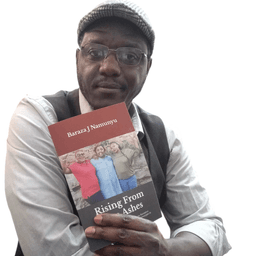

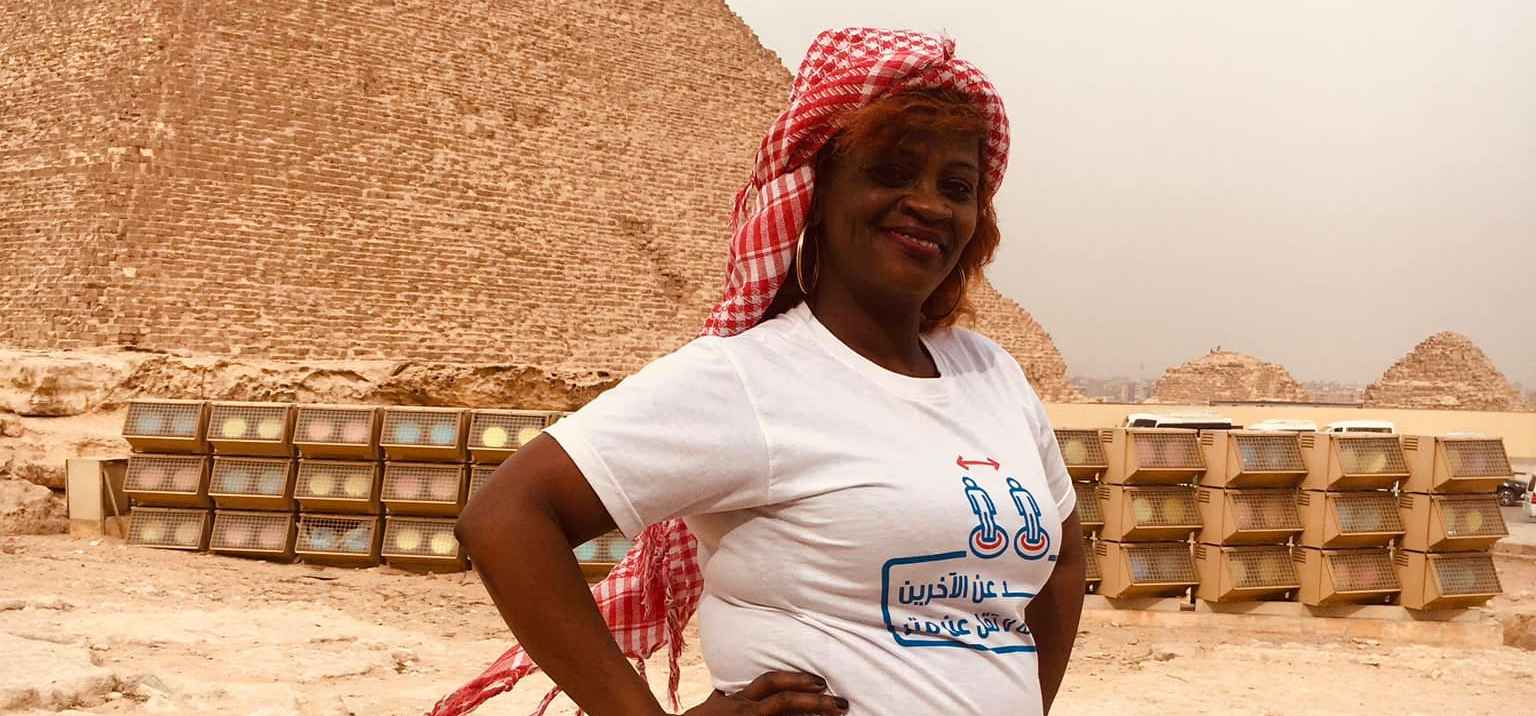
Photo Credit: Alice Nganga, Facebook
Healing Identity, Purpose, and Nationhood Across Borders
The Quiet Architecture of Becoming
There are lives that unfold loudly—marked by titles, applause, and visible power—and then there are those whose truest influence is cultivated in the unseen corridors of endurance, loss, faith, and quiet decision-making. Alice Nganga, known to some as Alissa, belongs to both worlds.
To understand Alice is to understand a certain kind of disciplined tenderness—a mind trained in policy and negotiation, anchored by a heart that has known both belonging and displacement. Her story is not simply that of a diaspora strategist or trade diplomat. It is the story of a woman who has learned to translate the language of survival into the grammar of service.
Raised in Central Kenya, Alice’s early life bore the imprints of structure, expectation, and public consciousness. As the daughter of a former Member of the County Assembly, governance was not an abstract idea; it was a living, breathing part of her childhood environment. Conversations around community, responsibility, and accountability were not academic—they were lived realities at the dinner table.
From a mental wellbeing perspective, such environments often produce two possibilities: either a quiet withdrawal from pressure or a heightened sense of purpose. Alice chose the latter. What emerged early in her psyche was a profound internal question: “How does one serve without losing oneself?” This question would later define her journey across continents.
Turkana: The Landscape That Forged Her Emotional Grit
Alice’s formative years at Turkana Girls High School marked the beginning of her psychological independence. Turkana is not merely a geographical region—it is an emotional terrain. Vast, demanding, often unforgiving, it teaches lessons that no classroom textbook ever could.
In the arid expanses of Northern Kenya, Alice encountered the reality of scarcity, diversity, and resilience. Here, she learned that leadership is not about dominance, but about presence—the ability to stand firm in spaces where comfort is absent.
For a young woman coming from Central Kenya, Turkana was a cultural shift. Yet, psychologically, it became her first exposure to adaptive resilience—the capacity to recalibrate one’s identity in unfamiliar environments.
Mental health practitioners often speak of “threshold moments”—experiences that stretch one’s emotional capacity until a new self emerges. Turkana was that threshold for Alice.
She learned:
- To hold discomfort without collapsing.
- To observe before reacting.
- To lead without needing validation.
These traits would later become essential in her diaspora work, where cultural negotiation and emotional intelligence are paramount.
The Discipline of Structure: Kenya Institute of Management
If Turkana built her inner resilience, the Kenya Institute of Management (KIM) refined her external discipline. Here, Alice transitioned from instinctive leadership to structured competence.
KIM provided her with the language of systems—governance frameworks, organizational strategy, and administrative precision. But beyond the academic rigor, it nurtured something deeper: confidence in intellectual authority.
For many women in leadership spaces, particularly within African contexts, there is often an internal negotiation between competence and confidence. Alice’s time at KIM helped bridge that gap.
From a psychological standpoint, this phase marked the strengthening of what we call the executive self—the part of the mind responsible for decision-making, accountability, and forward planning.
She was no longer just a young woman with potential; she became a professional with clarity.
Learning to Speak Peace: The Global Change Ambassadors Experience
Alice’s journey into diplomacy was not accidental—it was intentional, cultivated, and deeply personal. Her engagement with Global Change Ambassadors introduced her to the architecture of peacebuilding and international dialogue.
Peace advocacy, when viewed through a mental health lens, requires a rare emotional discipline. It demands:
- The ability to listen to opposing truths.
- The restraint to hold anger without escalation.
- The courage to mediate without bias.
This phase of her life expanded her identity beyond national borders. She began to see herself not only as a Kenyan citizen but as a global participant in conversations around migration, equity, and justice.
It is important to note that such transformations often come with internal tension. One begins to belong everywhere and nowhere at the same time.
For Alice, this tension did not become a burden—it became a bridge.
YMCA Nairobi South: The First Laboratory of Impact
Before the international stage, there was the local ground. At YMCA Nairobi South, where she served as Vice Chair, Alice found her first real testing ground for leadership.
Community work is often romanticized, but in reality, it is deeply complex. You encounter:
- Competing needs.
- Limited resources.
- Emotional fatigue.
Yet it is in these environments that authentic leadership is born.
Alice developed what I would describe as empathetic mobilization—the ability to inspire action while remaining emotionally attuned to the people she served.
She learned that leadership is less about authority and more about alignment:
- Aligning people with purpose.
- Aligning vision with reality.
- Aligning hope with action.
This experience planted a foundational belief that would define her later work: communities do not need saving—they need structuring and empowerment.
The Psychology of Departure: Leaving Kenya for Egypt
In 2010, Alice made a decision that would alter the trajectory of her life—she relocated to Egypt.
Migration, even when voluntary, is a psychologically disruptive experience. It involves:
- The loss of familiar identity markers.
- The need to rebuild social belonging.
- The silent grief of distance.
For many diaspora individuals, relocation is often narrated as opportunity. But beneath that narrative lies a quieter truth: migration demands a redefinition of self.
For Alice, this transition was both an ending and a beginning.
She left behind:
- Established networks.
- A growing leadership presence.
- Cultural familiarity.
And stepped into:
- Uncertainty.
- Entrepreneurship.
- The unknown emotional terrain of diaspora life.
This moment represents what psychologists call identity fragmentation—a temporary state where past and present selves feel disconnected.
Yet, it is also where new identities are forged.
The Entrepreneurial Test: Resilience Under Pressure
Alice’s early years in Egypt were not cushioned by privilege—they were defined by adaptation. Entrepreneurship, particularly in a foreign land, exposes one to repeated cycles of failure, adjustment, and persistence.
This phase demanded what I often refer to as emotional stamina:
- The ability to endure without immediate reward.
- The courage to continue despite uncertainty.
- The discipline to rebuild after setbacks.
Many diaspora stories gloss over this stage, but it is here that the true transformation occurs.
Alice evolved from:
A structured administrator
to
A strategic risk-taker
From:
A national contributor
to
A global negotiator
It is in these quiet struggles that she began to understand the lived realities of Kenyans abroad—not as an observer, but as one of them.
Building Bridges: The Vision for Diaspora Investment
Alice’s advocacy for diaspora investment is deeply rooted in psychological insight rather than mere economic theory.
She understands a fundamental truth: diaspora individuals seek connection as much as they seek profit.
Land and housing, therefore, are not just investments—they are emotional anchors.
They represent:
- Continuity of identity
- Security of belonging
- A future return, even if symbolic
Through her partnerships with organizations like Optiven and other industry stakeholders, Alice sought to address a critical diaspora pain point: trust.
Fraud, misinformation, and broken promises had eroded confidence among Kenyans abroad. Alice positioned herself as a bridge of integrity—ensuring that investment pathways were transparent, reliable, and aligned with diaspora aspirations.
From a wellbeing perspective, this work is profoundly restorative. It reconnects individuals to their homeland in a way that is both tangible and emotionally fulfilling.
The Inner Cost of Leadership
What is rarely spoken about in stories like Alice’s is the emotional cost.
To exist as a bridge between nations, systems, and communities requires:
- Constant emotional regulation
- The suppression of personal fatigue
- The balancing of multiple identities
There is often a quiet loneliness that comes with such roles—a sense that one belongs everywhere professionally but nowhere personally.
Yet, Alice has managed to navigate this with remarkable grace. Her strength lies not in the absence of struggle but in her ability to integrate it.
She does not separate:
- The woman from the diplomat
- The migrant from the advocate
- The individual from the mission
Instead, she allows these identities to coexist, creating a holistic self.
A Living Bridge: Kenya and Its Global Citizens
Today, as a Technical Delegate in national migration and trade frameworks, Alice stands as a critical link between Kenya and its diaspora.
Her work is not simply administrative—it is relational.
She embodies:
- Policy with empathy
- Strategy with lived experience
- Leadership with humanity
She understands that diaspora engagement is not just about remittances—it is about dignity, inclusion, and recognition.
Lessons for the Diaspora Mind
Alice Nganga’s journey offers profound lessons for anyone navigating life between borders:
- Identity is Fluid, Not Fixed - You are allowed to evolve. Migration does not erase you—it expands you.
- Resilience is Learned, Not Inherited - Every challenge is an opportunity to strengthen your emotional capacity.
- Service is the Anchor - In moments of confusion, purpose grounded in service provides clarity.
- Invest Not Just Financially, But Emotionally - Connection to home is a vital part of mental wellbeing.
- Healing and Leadership Can Coexist - You do not have to be fully healed to lead—you simply need to be self-aware.
The Woman Beyond the Title
In the end, Alice Nganga is not defined by her titles, her affiliations, or even her achievements.
She is defined by her capacity to remain human in spaces that often demand detachment.
She is a woman who has:
- Carried her homeland across borders
- Transformed adversity into advocacy
- Turned personal evolution into collective impact
And perhaps most importantly, she is a reminder that the diaspora experience, though often fragmented, can be woven into something whole.
In the reflective language of Balozi Baraza, one might say:
“She did not lose herself in the journey—she multiplied herself within it.”
- Leadership
- Human Rights
- Global