
A Moment That Changed Everything
Oct 29, 2025
story
Seeking
Encouragement

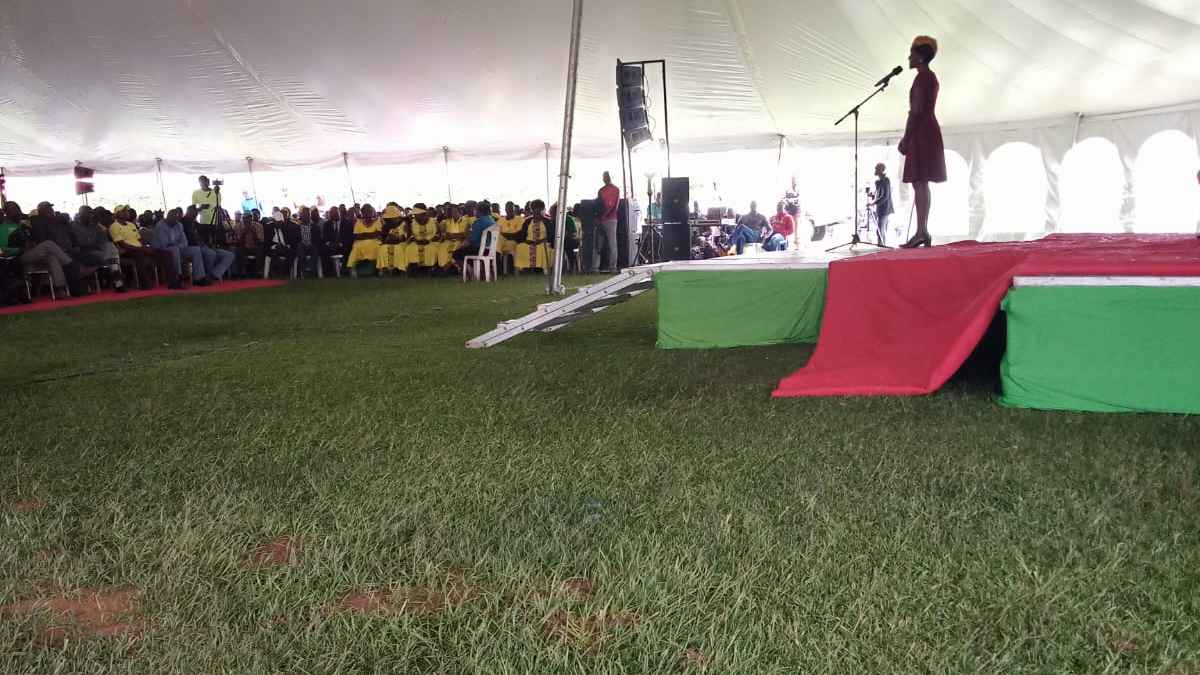
Photo Credit: Kristine Yakhama
It was an ordinary day, or so I thought. The phone call came unexpectedly. The number on the screen was unfamiliar, but I answered anyway, my curiosity piqued. The voice on the other end introduced themselves as an aide to Hon. Malala, a prominent figure in the region. "We need you to speak on behalf of Shinyalu Constituency tomorrow," the voice said, as though it were a simple request. "Five minutes, address the President, and mobilize 13 people to accompany you."
I was stunned. Why me? Of all the people they could have asked, why was it my name that came up? My mind raced with questions. I had never been in the limelight before, never been part of any political event of such magnitude. But my head swam with the same thought: Why not me? Maybe this was a chance to make a difference. To bring attention to the issues that plagued my community. But still, I could hardly believe it.
"I always speak sense," I muttered under my breath, trying to convince myself that I could actually pull this off. But even as I said those words, I couldn’t shake the feeling that I was dreaming. It was all too surreal.
After hanging up, I took a deep breath and called the 13 people who had been requested to accompany me. Some were still asleep, others groggy, but I told them, "We meet tomorrow at 8:00 AM at Khayega Market. I’ll explain everything once we’re together." My voice didn’t give away the uncertainty I felt. But I knew that once this was real, I had to pull it off.
The next morning came with a sense of urgency. The time was ticking, and there was no turning back. We met at the market, and I quickly briefed the group—13 of us in total—on the plan, though I left out the specifics. Where we were headed, what the event was about, and why I had been chosen to speak... I couldn’t explain it all. I just told them to trust me, and they did.
We set off, not knowing exactly where we were going but ready for whatever came our way. The journey took us through winding roads, unfamiliar terrain, and an air of anticipation hanging in the balance. As we neared Sigalagala, the first signs of a heavily secured area became evident. Police were stationed at intervals along the road, their presence heavy and palpable. The closer we got to Musingu High School, the tighter the security became.
It was clear that something significant was about to happen.
As we arrived, the gates of the school were open, but the police force was everywhere—guards, vehicles, and a strong sense of order. We were ushered in, each person directed to their designated seat based on the sub-county they were representing. I was still in awe, trying to process what was unfolding before my eyes.
And then, the President and his entourage arrived. There was a sense of awe in the air as they made their way onto the grounds. He joined us in a large tent set up on the football pitch. It was overwhelming, the grandeur of it all—the formality, the pageantry, and the sense that I was about to address the highest office in the land.
The event began with the National Anthem. People stood, hands on their hearts, and the atmosphere grew charged with patriotism. The master of ceremonies called out the names of representatives from different sub-counties to come forward and address the President. And
then, my name was called.
The butterflies in my stomach were unmistakable. The crowd felt immense, their eyes on me, waiting for me to speak. I hadn’t prepared anything formal—how could I? This was all too sudden. But I had my message, the issues I had been living with for years, the struggles of my people in Shinyalu. This was my chance to finally speak for those who had long been unheard.
I closed my eyes for a brief moment and prayed. Lord, give me wisdom, give me courage. I took a deep breath and walked toward the microphone, my heart pounding in my chest. I started by acknowledging the President’s presence and thanking him for his leadership. I then spoke directly to the issues affecting Shinyalu—issues that had plagued us for years and had been largely ignored by authorities.
“I stand before you today as a representative of the people of Shinyalu,” I began, my voice shaky but determined. “We are a community that has long struggled with a poor road network, and it’s costing us lives—mothers, newborns, and our farmers. The road from Kakamega to Chepsonoi is in dire condition, and it’s not just an inconvenience—it’s a matter of life and death. We are losing lives on that road every single day.”
I paused, letting the weight of my words settle. I could feel the President’s gaze on me, but I didn’t flinch. “We don’t have a Level 4 hospital in Shinyalu. For any serious medical needs, we have to travel to Kakamega County Referral Hospital. The condition of the road makes that journey treacherous. We need this road tarmacked, Mr. President, not just for us, but for the safety of our mothers and children.”
There was a slight murmur in the crowd, and I continued, pushing through the nerves that still threatened to overwhelm me.
“We are also the leading producers of tea in Western Kenya, yet we suffer even more because of poor infrastructure. We take our tea to Mudete Tea Factory in Vihiga County, while we, in Shinyalu, remain without a factory. It doesn’t make sense. The money that should be used to rehabilitate tea feeder roads is being misused, and cartels are exploiting our farmers.”
At that moment, I could sense the President’s attention shift. He seemed to understand the urgency in my voice. “Hon. Lisamula had purchased land for us through NG-CFF, and the county government promised to build a tea factory. Instead, what we got were pit latrines and a fence. We were promised a factory, not pit latrines. This is unacceptable.”
The President’s eyes narrowed, his lips pressed into a firm line. I had spoken with passion, but it seemed my words had resonated with him. He assured me that the road would be tarmacked and that he would follow up on the tea factory as well. He promised that the national government would partner with the county government, committing 70% of the funds, while the county would contribute 30%.
When I finished my speech, the crowd erupted into applause, and I returned to my seat, my legs trembling. I had done it. I had spoken for the people of Shinyalu, and I had done it in front of the President himself.
Later, as I walked away from the event, I couldn’t help but reflect on the promises that had been made. For the first time in my life, I felt like I had truly made a difference. I had been heard.
The following day, the President’s office confirmed that the road project was moving forward, with the first steps already underway. It was a small victory, but a victory nonetheless. And as for the tea factory? I knew I had planted the seed, and I wouldn’t let it wither. I would follow up, just as I promised the President.
Shinyalu had spoken, and for once, we were no longer invisible.
- Human Rights
- Leadership
- Environment
- Health
- Moments of Hope
- Global