
Today Our contribution to the rural women's & child health group organization the work we are doing
Mar 2, 2022
story
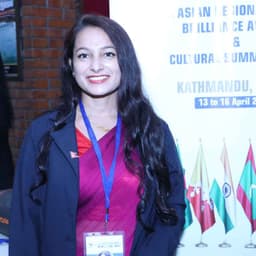

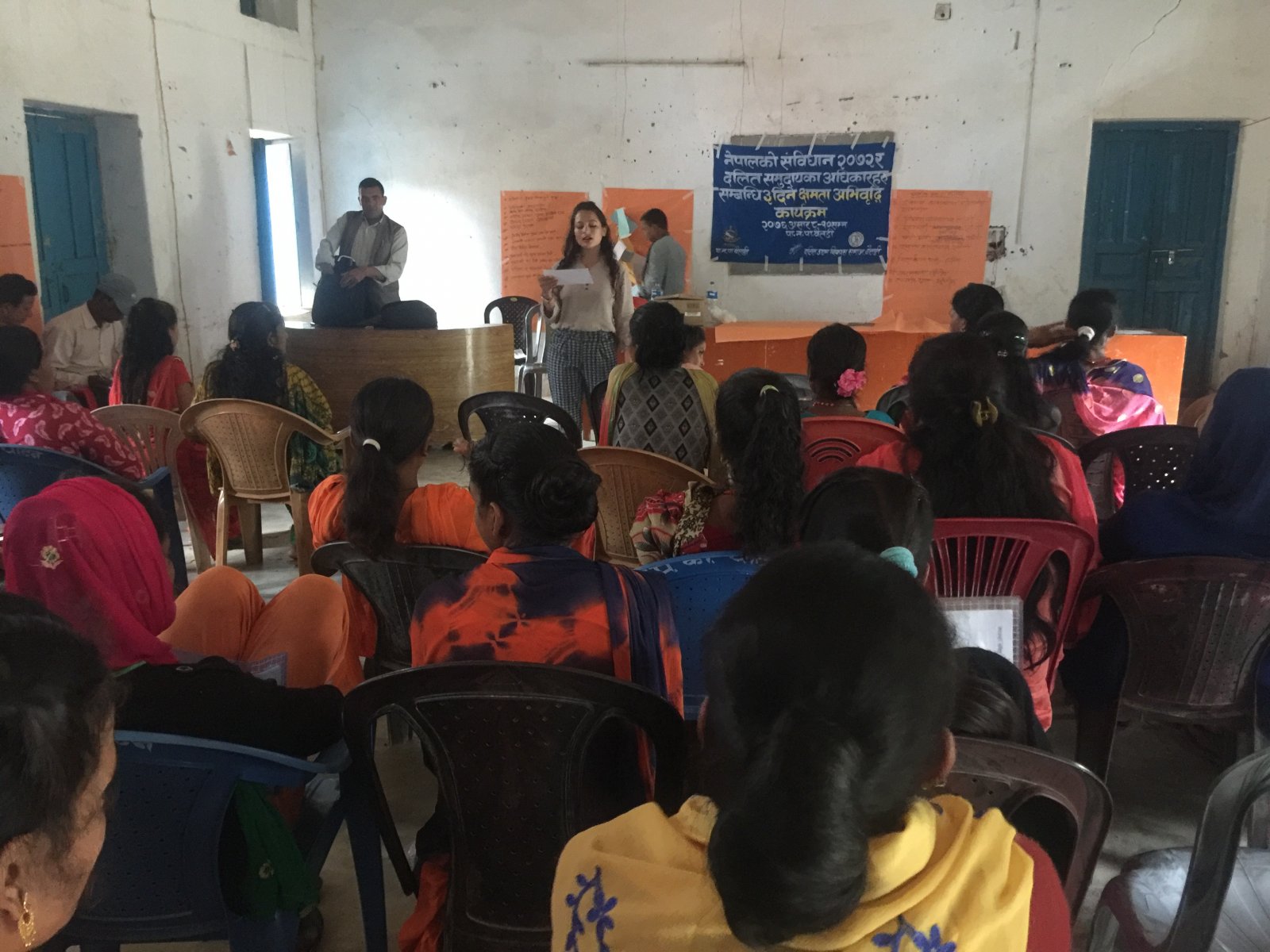
First of all, hello everyone, my self Radha Wali. I belong to Nepal. I would like to express my love to the brothers and sisters. Everyone is presented with touching hurt work and experiences from their respective fields. I am very grateful for also joining the World Pulse. I am also sharing presenting my work today. I hope the world plus gives love and supports to us.
Rural women and child health group (RWVH) is a national non-government organization established in 2003 to promote women and children for securing their fundamental rights and empowering them to various socioeconomic issues in order to lead productive lives. it the help of government and national/international donor agencies. The mission of this organization is to bring attitudinal change to facilitate sustainable development, socio-ecological justice, and equity in society. Initially, it was established to help the victims of the civil war of Nepal which lasted from 1996 to 2006, during the war, a massive number of people lost their lives, some were displaced and many of them became homeless. With the support of the World Bank, RWCH conducted various vocational programs for war victims. Many people were able to improve their livelihood by being financially independent. After the civil war, the children were deprived of basic human needs. RWCH supported homeless, orphans, and victim children by providing them education facilities, and helping them fulfill their basic needs. Today RWCH not only works for rural women and children but has expanded its working areas to other social disadvantage groups and conflict-affected individuals and families. Various programs are being implemented in an effort to fulfill its vore vision and mission of enhancing the wellbeing of the community for sustainable development, socio-ecological justice, and equity through the advancement of social work policy and practice. RWCH has completed several projects and programs of community development. RWCH specializes in entrepreneurship & various skill development training having access to various resources, trainers, facilitators, advisors, and consultants. Having experience with different business & entrepreneurship development projects, RWCH has capabilities of various market youth, Dalits, Janajatis, etc. It has a wide network with local businesses for the placement of a trainee. RWCH was awarded a 10% bonus for excellent performance while implementing a business development service funded by the World Banke & peace & reconstruction. Various organizations are working as a partner with RWCH in the sectors of women, children, skill training, micro/small enterprise development, scholarship support for the students from poor families, women, and child health. With the support of those partners, a large number of programs have been conducted by RWCH across the country. The global health pandemic COVID-19 caused many people of Nepal to suffer from a multitude of challenges including the financial crisis and lack of health services and facilities, RWCH helped the COVID victims by providing them food, money as well as free health campaigns. RWCH has helped the victims of the earthquake in 2072 and the floods in 2070 in various places of Nepal. RWCH is always ready to serve and is on top to help the victims of disasters whenever natural calamities arise.
Our Vision A just, prosperous and inclusive society where every men and woman regardless of caste, gender, language, creed, culture, ethnicity enjoy equal rights and opportunity to pursue his/her social, economic, and cultural development
MISSION Organize and empower community people and groups, sensitize State and Non-State duty-bearers, enable locals to have access and control over local resources, transfer skills, and resources, and access them to information
ORGANIZATIONAL OBJECTIVES Organize, empower and mobilize community/groups (Rights-holders) to claim and assert rights and resources through the campaign, social movement, issue-based advocacy Build capacity of poor, women, Dalit, OBC (other backward class) and excluded groups, build network and alliances with development organizations, Civil Society Organizations (CSOs), Advocacy groups, and different stakeholders, at community, district and national level Engage with State and Non-State duty-bearers, advocate for accountability, transparency, and good governance, engage with Rights-holders, build their capacity, broaden their knowledge and information base, enable them to voice their concerns, and assert rights to be served Build capacity of poor, women, Dalit, OBC, and excluded groups to claim and gain access and control over local resources thus bringing change into their lives Build institutional capacity of Community-based Organizations (CBOs), the organizations of Dalit, Women, Children, Youth, Physically Challenged, Conflict Victims/Affected, Senior Citizen, OBCs, and help them evolve so as to take charge of their own development Critically engage with State and Non-State organizations, agencies, influence in policy-making and development planning in favor of women, children, poor, Dalit, Youth, Physically Challenged, Senior Citizens, and OBCs Build capacity of stakeholders and Rights-holders, advocate for democracy, inclusion, Education and Child Rights, Peace Building, good governance, and transparency Build capacity of Rights-holders and Stakeholders to take up climate change issues, environment conservation, and safeguarding ecology Organize and empower Rights-holders to enable their access to overall health services (HIV/AIDS, Reproductive health, Mental Health, Nutrition), sensitize health-givers in favor of quality health-services Develop SSDC as a resource organization in capacity-building, training, skill-transfer, information, advocacy, planning, project development, development strategy
- Leadership
- Girl Power
- Gender-based Violence
- Human Rights
- South and Central Asia